To my English mind the scene on the edge of Ulaanbaatar is quintessentially Christmas. The ground is snow-covered while the sky, a vault of brilliant blue, shines all the way to the horizon. Fondant-like frosting covers naked branches, roofs and fence posts. A close neighbour, clothed from head to toe in fur, ambles along the pavement on his old horse. Stopping for a moment he mentions that the lamas are forecasting a harsh winter. 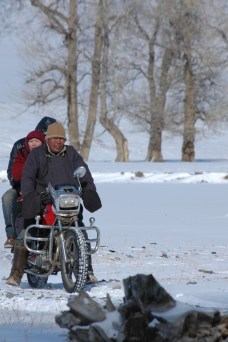
Officially Mongolia doesn’t celebrate Christmas and yet the shops are tempting shoppers to buy artificial pines, baubles and other gaudy frippery to decorate their homes. It’s true the New Year celebrations are growing in popularity and perhaps, one of these years, Mongolia will adopt Christmas as an official holiday. However at this point it’s only the church that marks the true meaning of the season with the coming of Emmanuel.
On the smoggy streets, close to the ger districts, hawkers stack sacks of firewood and coal and tout for business. Beyond the city limits a solitary woman stands on a lone corner selling pine nuts. With a pile of banana boxes for her counter she stamps her feet on the icy pavement. Day in and day out she’s there, rolled up in a thick deel, like a pig in a blanket, waiting and hoping for a sale.
Red and orange down-coated children make their way to school, carrying on their backs rucksacks that are nearly as big as them. With shrieks of delight they slip and slide along the pavement. Filled with grand ideas of being astronauts or inventors, dancers or artists they hope for a better future.
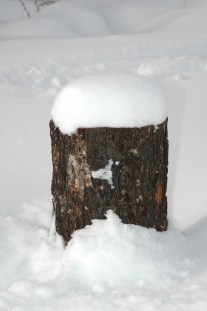 At the weekend a glut of battered cars appears in the bus stops heading out of city. The drivers erect a row of brightly-coloured sledges and, huddled in their cars, wait for parents, driving gleaming four-wheel vehicles, to stop and buy a sledge for their children. In juxtaposition the poor and rich exist together, each struggling for a better life. It’s Christmas, I want to shout, the time when we celebrate the true, living God’s son’s birth on earth.
The sun is incandescent with beauty — although I cannot look at it directly. With my eyes closed its warmth fools me into the thinking the cold is less cruel than it is. But, constantly nipping at my extremities and seeping iciness into my shoes, it steals away my warmth. Relentlessly, the wind whistles down this valley, laughing as it rips through layers of clothes to reach my heart, pulling heat from the very core of my being.
In nature only one thing removes coldness. Likewise, ultimately, there’s only one thing that can remove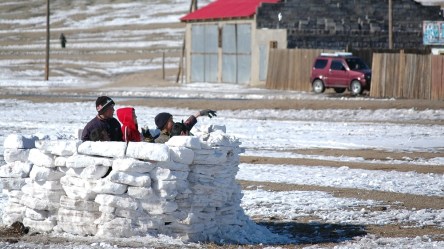 the eternal cold loneliness of our soul: the love of God. We were far from God but, taking great trouble, He came close, looked at us and loved us. In fact He loved us before the world ever began and had a plan to draw us into His love and take away the cold sin at the core of our beings. Filled with His love our unspoken ideals become a reality. He came to free us to love Him and that’s why we celebrate Christmas.
 However when my father died, nearly thirty years ago, I learned that my mother had been adopted. Such news explained so many mysteries but it also left so many questions unanswered. Who were my real grandparents, aunties and uncles? Of course there was no way to find answers to those questions but it made me realise how important it is to know that we belong.
 But the threads that bind us in families can sometimes appear as delicate and fine as a spider’s web suspended between two trees. Mostly, invisible to the eye we only see it when the shimmering sun illuminates the gossamers. Or the rain or dust weighs down the supple strands. Often, we pass by without even noticing until we find minute threads clinging to our clothes.
 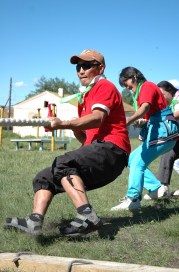 The richness of our families so often mirrors the family that God births Christians into. There are plenty of interesting characters in His family. But if we are in Christ then they all become our brothers and sisters, aunties and uncles. Many of them are easy to love and respect but there are some whose sharp personalities, actions and opinions just don’t fit with our personality and leave us never wanting to speak to them again. Yet as Christians, for better or worse, we are in God’s family, we are a brother or sister, an older or younger member. And God calls us to love those in His family, even the strange one with all their faults and idiosyncrasies, and in loving them we soon learn that we too have plenty of faults and idiosyncrasies ourselves.
 Bemoaning this loss, I told God I didn’t think it was fair. (You’d have thought I’d have learned by now that life isn’t always fair.) Nevertheless, in my gloom God extended His grace as the faces of friends, unbidden, started coming to my mind. A long-term gossip, who now speaks words of encouragement, has become an inspiration to many. Another, rescued from dark years of alcoholism, is helping others find freedom.
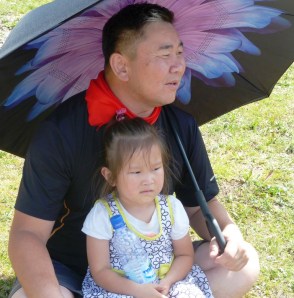 Although the warm days speed by the Mongolians take time to revel in each and every one. Those who spent their summers near us let the days meander at their own pace, eating what they have, sleeping when they’re tired and enjoying time with family and friends without too much thought for tomorrow.
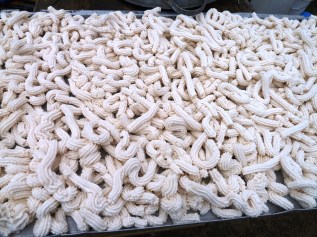 Storing food for tomorrow seems sensible but I wonder what motivated the Israelites. Did they doubt God’s promises? Or imagine a day would come when He would not be present or not supply the nourishment they needed?
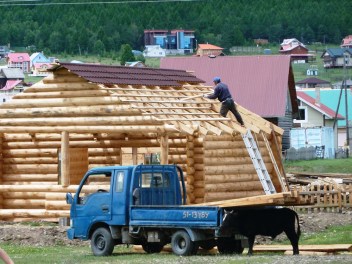 Cement trucks rumble down the road to building sites beyond the trees. Diggers and earth movers block lanes while shirt-less builders lay block and brick, set windows and roof, drill wells and erect fences. The warm months of the summer are a busy time for building and repairs. And yet in the frenzy of activity there comes a point when the work ceases and the Mongols stop to admire their work and rest.
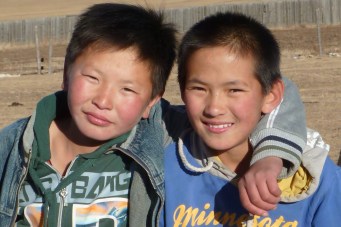 After the meal families settle, chatting and playing games, drinking and singing. The evening light mutes the hills and some take blankets and sleep beneath the stars. These days have a rhythm to them, activity and rest; friends and family, in log cabins in the woods or new homes beside the river, all enjoying the outdoors.
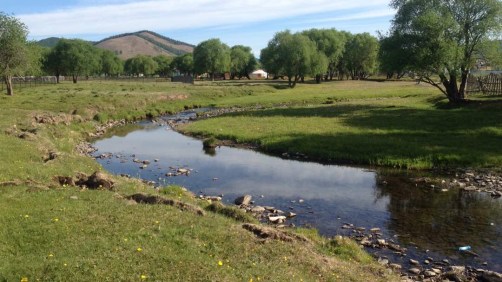 I believe Jesus calls me to hand all my labours to him and that He promises me rest. He is the Lord of rest. But there are moments when I miss it. Stumbling over my humanness I intuitively find myself doing good works to earn God’s blessing, or meet my own exacting unrealistic standards. It is exhausting as inwardly I never make the grade and, if I’m not vigilant, the cycle of trying to prove myself worthy never ceases.
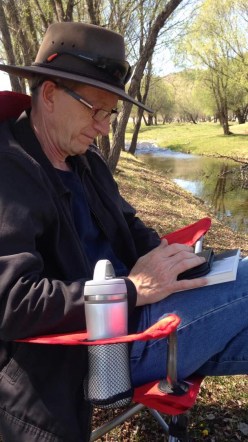 On the seventh day God rested from his work completely satisfied with what He had done. If Jesus gives meaning to my life then He will enable me to rest. And His rest is different from mine; it is a deep rest which doesn’t bind me as a slave but gives me liberty because I do not rest on my accomplishments but His, and His work is good. He has given me everything necessary for me to say that my work is finished.
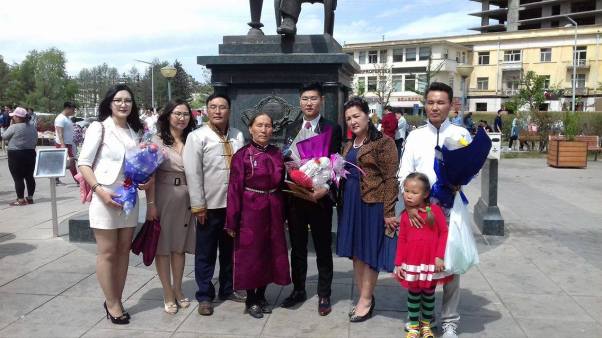 Equipped with an education these young adults are ready to launch into life. They have accumulated learning, grown up and are moving on. Pursuing happiness they look for jobs, buy their first cars, seek a partner and have children. This is life; filled with the dreams we all hope will bring happiness to our souls.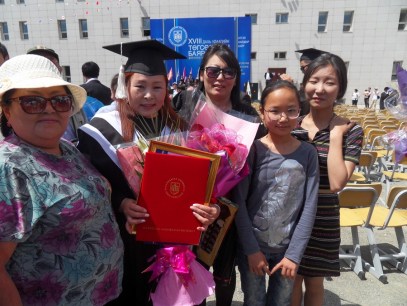
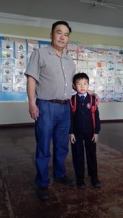 I am thankful for the zeal of our young friends who’ve just graduated. They are eager to experience all that the world has to offer and I pray that they will. But I also find myself asking God to give them the opportunity to hear the truth of the gospel again and meditate on His word; and learn, as I continue to learn, that by delighting ourselves in Him first we will find true contentment for our souls, and realise, even in the darkest of days, that His love is able to overcome all our sadness.
 Traditionally families move sequentially with the seasons. I think most have already moved from their sheltered winter places to their spring locations. Families winter in the same location each year, keeping the hay they gathered the previous autumn in rough barns and their sheep and goats in small chorales. In summer they pitch their tents close to water on lush pastures where their cattle can graze freely. In the autumn they move on again until it’s time to head back to their winter location.
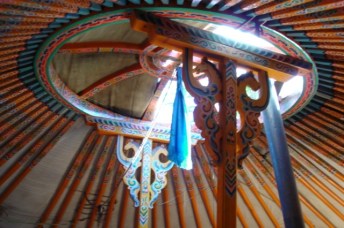 It is interesting to observe. They have the freedom to move anywhere but essentially they move to pre-determined spots in a fixed circuit. Watching the nomads’ migratory habits reminds me of God’s guidance. The link may seem tenuous but I see the Mongolian nomads making free-will decisions that appear pre-destined.
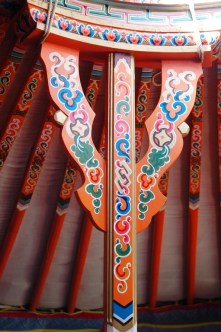 struggle to hold the truth in balance. Could it be that we are completely free to choose and yet completely in the hands of God? My small mind can’t fathom the depths of this reality — I want it to be one or the other, but it isn’t.
 Unlike the harmony and self-betterment which people hope for, we are not calling people simply to come and clean up their lives, or work towards been moral or religious. Christianity is not an add-on option or even a system that rearranges our lives to make us better. But it is a new beginning; a complete new beginning from which each one of us must start. It is radical and involves a new birth where, by God’s Spirit, the old is rooted out and a new principle of supernatural life is planted inside us.
 given us the opportunity to pass this really good news on. We can’t make anyone a Christian, that’s God’s work. But we can give people opportunity to hear and as they hear we trust they will listen, think deeply and receive God’s new life.
 We had a plan. God had given us a sense of what we should we do, where we should be working and with whom. If you’d have asked us we’d have said we were relying on the Lord to fulfil His plan but in our mind’s eye we had some ideas ourselves on how we were going to reach the goals we had set.
 After returning from Thailand we cleared the kitchen of gluten flours and sauces and before I knew it I was sick again. Realising how sensitive I was to gluten products I began asking God what was going on. “Hadn’t He called us to live and work in Mongolia? Didn’t He know how hard it is to visit Mongolian families and not eat their food? Would they understand if I turned up with my own box of food?” And so the questions went on.
 Paul tells the Romans that God works all together for good to those who love Him. I take comfort from that verse.
 Over the years I’ve wondered whether this is true. Especially since I used to believe that by loving and serving God He would protect me from suffering, and He didn’t. Non-Christians and Christians alike all face suffering. Our bodies get sick, relationships break down and loved ones die but the Bible says that God can work all things together for good to those who know and love Him.
 cause it is comforting. We come to Christianity because it is true. God doesn’t take us away from the hardness of life but through His strength He teaches us how to deal with life’s sorrows. Sometimes we suffer deeply and only He can truly comfort the hurts of our hearts.
 Nomadic Pages