“Are you enjoying autumn?” people ask. I always marvel because as soon as Nadaam, the July sporting festival has passed the Mongolians start talking about autumn. The days may continue as hot as ever but there is a distinct coolness to the mornings and evenings.
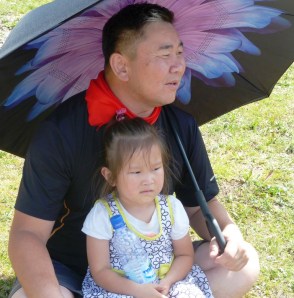 Although the warm days speed by the Mongolians take time to revel in each and every one. Those who spent their summers near us let the days meander at their own pace, eating what they have, sleeping when they’re tired and enjoying time with family and friends without too much thought for tomorrow.
Traditionally the Mongolians have not been planners —although for many life is changing. Living for the day has been a part of their psyche and I must admit it’s a quality I find appealing though, in reality, I struggle to live without planning ahead or thinking of the next responsibility. Planning is prudent yet living for today has a biblical ring to it — Jesus instructed his disciples not to worry about tomorrow and to pray for their daily bread.
Our life with God is eternal but it is lived out on this earth one day at a time, receiving His daily provision and gifts. Thinking on God’s instruction my mind runs back to the Old Testament and the Israelites journeying through the wilderness. Every day they experienced God’s faithful provision. However, when the people tried to hoard the manna and quail, even though God had told them not to, it melted or rotted away.
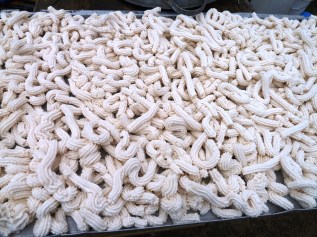 Storing food for tomorrow seems sensible but I wonder what motivated the Israelites. Did they doubt God’s promises? Or imagine a day would come when He would not be present or not supply the nourishment they needed?
Jesus instructed us to pray for our bread daily, to entrust ourselves into His care and receive His abundant provision, daily. I sense this principle holds true for all of God’s gifts. As we make our petitions known to God, He comes and supplies us with all that we need. But such gifts must be received and used up in the present moment because, like the manna in the wilderness, they do not keep overnight.
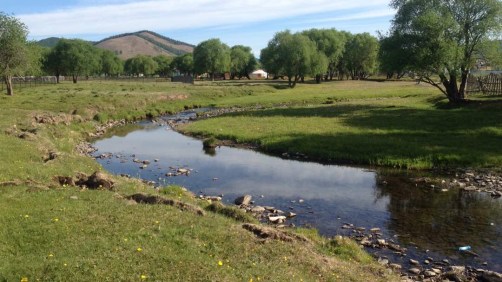
The cool stream has become the daily washing place. A mother with a broken wedge of soap pummels clothes clean and then lays them on the grass to dry. Toddlers throw stones from the safety of the bankside while woops of delight, amidst much splashing, accompany children immersed in the shady depths. A young boy, baseball cap in hand, scoops a cap-full of water and plonks it on his head. He cracks a huge grin as the water cascades down his head and small body. Laughing, he repeats the process relishing every sweet moment.

Mongolia is changing. Western influences shape city life but I trust that the Mongolians will continue to enjoy the moment as it reminds me that I too need to receive God’s precious grace gifts afresh every morning.
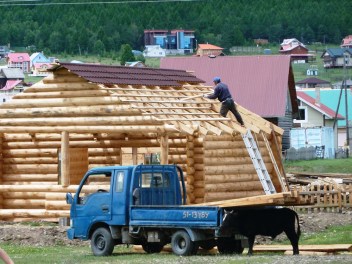 Cement trucks rumble down the road to building sites beyond the trees. Diggers and earth movers block lanes while shirt-less builders lay block and brick, set windows and roof, drill wells and erect fences. The warm months of the summer are a busy time for building and repairs. And yet in the frenzy of activity there comes a point when the work ceases and the Mongols stop to admire their work and rest.
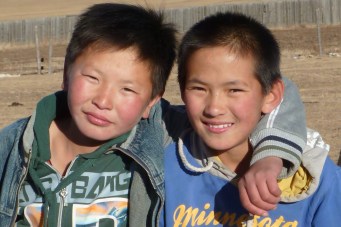 After the meal families settle, chatting and playing games, drinking and singing. The evening light mutes the hills and some take blankets and sleep beneath the stars. These days have a rhythm to them, activity and rest; friends and family, in log cabins in the woods or new homes beside the river, all enjoying the outdoors.
 I believe Jesus calls me to hand all my labours to him and that He promises me rest. He is the Lord of rest. But there are moments when I miss it. Stumbling over my humanness I intuitively find myself doing good works to earn God’s blessing, or meet my own exacting unrealistic standards. It is exhausting as inwardly I never make the grade and, if I’m not vigilant, the cycle of trying to prove myself worthy never ceases.
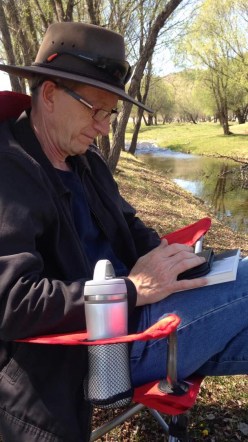 On the seventh day God rested from his work completely satisfied with what He had done. If Jesus gives meaning to my life then He will enable me to rest. And His rest is different from mine; it is a deep rest which doesn’t bind me as a slave but gives me liberty because I do not rest on my accomplishments but His, and His work is good. He has given me everything necessary for me to say that my work is finished.
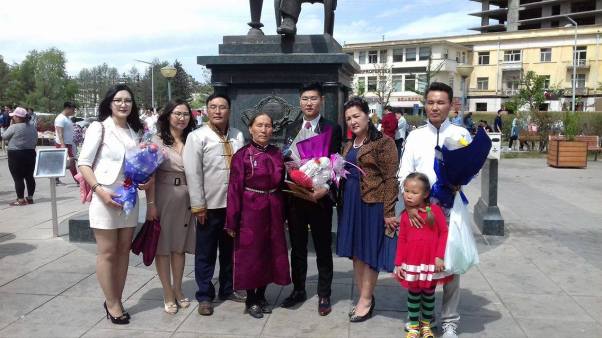 Equipped with an education these young adults are ready to launch into life. They have accumulated learning, grown up and are moving on. Pursuing happiness they look for jobs, buy their first cars, seek a partner and have children. This is life; filled with the dreams we all hope will bring happiness to our souls.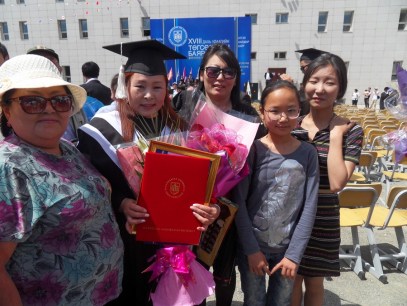
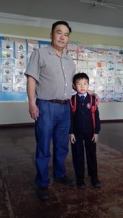 I am thankful for the zeal of our young friends who’ve just graduated. They are eager to experience all that the world has to offer and I pray that they will. But I also find myself asking God to give them the opportunity to hear the truth of the gospel again and meditate on His word; and learn, as I continue to learn, that by delighting ourselves in Him first we will find true contentment for our souls, and realise, even in the darkest of days, that His love is able to overcome all our sadness.
 Traditionally families move sequentially with the seasons. I think most have already moved from their sheltered winter places to their spring locations. Families winter in the same location each year, keeping the hay they gathered the previous autumn in rough barns and their sheep and goats in small chorales. In summer they pitch their tents close to water on lush pastures where their cattle can graze freely. In the autumn they move on again until it’s time to head back to their winter location.
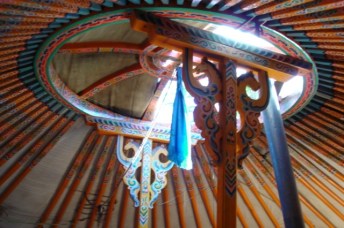 It is interesting to observe. They have the freedom to move anywhere but essentially they move to pre-determined spots in a fixed circuit. Watching the nomads’ migratory habits reminds me of God’s guidance. The link may seem tenuous but I see the Mongolian nomads making free-will decisions that appear pre-destined.
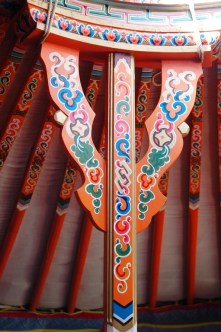 struggle to hold the truth in balance. Could it be that we are completely free to choose and yet completely in the hands of God? My small mind can’t fathom the depths of this reality — I want it to be one or the other, but it isn’t.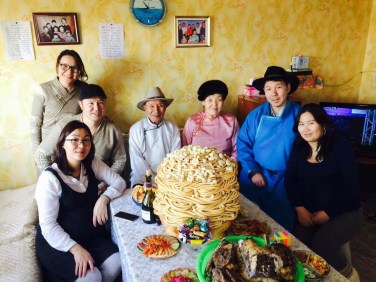
 Unlike the harmony and self-betterment which people hope for, we are not calling people simply to come and clean up their lives, or work towards been moral or religious. Christianity is not an add-on option or even a system that rearranges our lives to make us better. But it is a new beginning; a complete new beginning from which each one of us must start. It is radical and involves a new birth where, by God’s Spirit, the old is rooted out and a new principle of supernatural life is planted inside us.
 given us the opportunity to pass this really good news on. We can’t make anyone a Christian, that’s God’s work. But we can give people opportunity to hear and as they hear we trust they will listen, think deeply and receive God’s new life.
 We had a plan. God had given us a sense of what we should we do, where we should be working and with whom. If you’d have asked us we’d have said we were relying on the Lord to fulfil His plan but in our mind’s eye we had some ideas ourselves on how we were going to reach the goals we had set.
 After returning from Thailand we cleared the kitchen of gluten flours and sauces and before I knew it I was sick again. Realising how sensitive I was to gluten products I began asking God what was going on. “Hadn’t He called us to live and work in Mongolia? Didn’t He know how hard it is to visit Mongolian families and not eat their food? Would they understand if I turned up with my own box of food?” And so the questions went on.
 Paul tells the Romans that God works all together for good to those who love Him. I take comfort from that verse.
 Over the years I’ve wondered whether this is true. Especially since I used to believe that by loving and serving God He would protect me from suffering, and He didn’t. Non-Christians and Christians alike all face suffering. Our bodies get sick, relationships break down and loved ones die but the Bible says that God can work all things together for good to those who know and love Him.
 cause it is comforting. We come to Christianity because it is true. God doesn’t take us away from the hardness of life but through His strength He teaches us how to deal with life’s sorrows. Sometimes we suffer deeply and only He can truly comfort the hurts of our hearts.
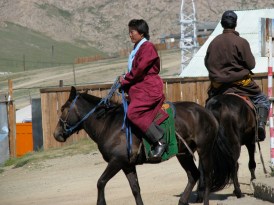 Mongolians are extraordinary horsemen. And perhaps it’s always been so. Certainly horsemanship has featured heavily in Mongolia’s history and their world. In the thirteenth century the ground shuddered to the sound of the Mongol hordes, warriors and their warhorses, thundering north, south, east and west as they conquered tribes and nations to establish their long since diminished empire.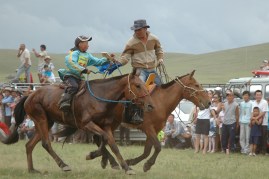
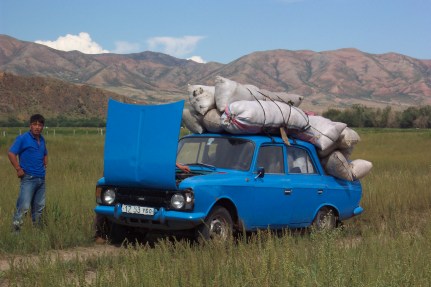
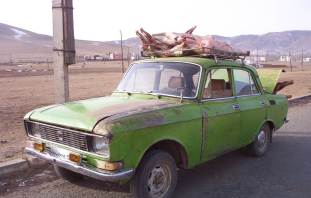 Twenty years ago two cars was a traffic jam but today the city streets are choked with a mass of metal as cars, buses and trucks all vie for first position. Without a hint of mirror or signal, drivers manoeuvre in and out of buses lanes. Or drawing their breath in, they slyly wedge themselves into non-existent gaps that force others to stop, before everyone, (well almost everyone,) comes to a standstill at stop signs. Toes to the metal young drivers rev the engines of their hand-painted saloons to fever pitch. As they screech away from the lights acrid rubber smoulders on the tarmac while plumes of black smoke escape piston-shot engines.
 Rising in the midst of my craving a desire can gather momentum; I want to push others aside and grab the prize for myself. But the moment I succeed, the moment I grasp it in my hand its glory is disappears. My success is short-lived without any real depth or value to it. And against the backdrop of Jesus’ character, respect for the world’s ways seems pitiable.
 We walked, avoiding the chicken and geese that roamed free, smiling as we passed the chef flipping pancakes on his outdoor hotplate and always saying hello to the villagers who eyed us with interest. The women chatting at their doors, the elderly gentlemen gathered beneath an ancient tree engrossed in checkers, cards or dancing to music in the cool of the evening, must have wondered what these foreigners were doing in their village.
 Through repentance and faith God progressively takes the ‘me’ out of us and replaces it with an outward focus on Him and others. The gospel gives us the opportunity to relate to one another differently.
 From the cut of his suit and his immaculate appearance it was obvious that the man was successful, and probably in his late forties. But the slump of his shoulders, his staccato speech and the way his hand kept rubbing his chin told me he’d just been confronted with a reality that was beyond his control. Uncertainties were casting shadows of fear across his path.
 We may continue to know sadness and sorrow but His greatness in our lives enables us to stand strong. Hope in God is never disappointed. When we allow Him to transform the natural fears which drive us to dread, then we begin to see the love that encircles us. It is His love and filled with a radiance that never fades. It is a love which never lets us go — even after all other loves have departed.
