You ask a lot of questions!

‘You ask a lot of questions!’ said Otgoo. She is right, I do ask a lot of questions. I am curious to learn about people, to know their stories, to know what has shaped them. I call myself an amateur anthropologist but maybe, I’m just nosy.

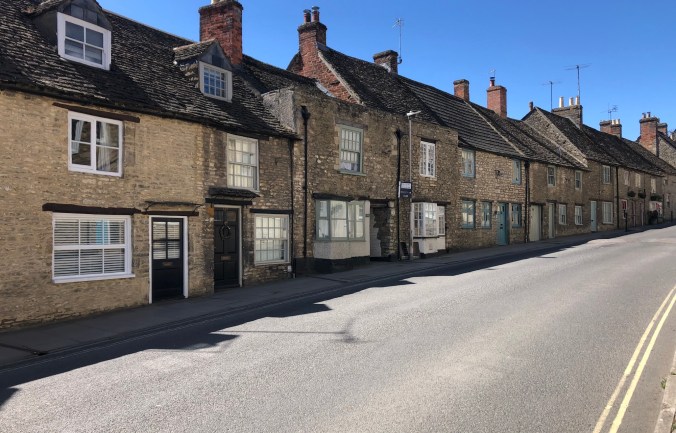
The first time I met someone completely different to myself questions flowed from my lips. Maria was an old Italian lady from the church I attended as a young teenager. She lived in an unremarkable terraced house in the small town where I grew up.

Stepping over her threshold, I realised that she and her home were like nothing I’d ever encountered before. Maria’s large kitchen was alive with noise, fragrant smells and music. The dusty pink walls, navy cupboards and deep terracotta tiled floor were the heart of her home; the place she cooked, fed and entertained all her guests.

She would seat me at her scrubbed kitchen table, hand me a tiny cup of thick black coffee that sent my head spinning and begin chatting. On sunny afternoons, she gave me a thick slice of sugar covered bread and a glass of wine. It’s for energy, she used to say. All the while she bustled around her kitchen, her small plump form covered in a floral overall like apron that reminded me of Beatrix Potter’s Mrs Tiggy-Winkle.

Always she was cooking something: preserves, sausages or a fragrant tomato and garlic sauce that bubbled atop her stove. With sighs of contentment, she snipped herbs from stems hanging on the walls and added dried beans to sauces.

Old-framed photos, hand painted bowls, delicate glassware and curious jars of beans, leaves and mushrooms crowded her shelves. Each item, every ingredient, had a story. She gathered mushrooms before dawn from nearby fields while the wild leaves and garlic were foraged in the woods.

Yellowed pages scribbled with recipes were the inspirations for her concoctions. She cooked and chatted. Her broken English littered with Italian words I didn’t understand. Often, she spoke of her dead husband Jack. They had met during the Second World War when he was fighting in Calabria. Falling in love, Maria had followed him to England. Their marriage had been a happy one, but they had no children. She missed him terribly, uttered Jesus’ name frequently as she wept easily and unashamedly.

I was sorry for her but knew nothing of empathy then. All I recognised was that Maria intrigued and enchanted me. Her home, her words and her life somehow connected with mine, opening a window into an unknown world that drew out a desire to know people from different nations and cultures.

That desire has remained steadfast throughout my life. I lived with and amongst people from different lands and cultures and it has been a joy to learn from them. Each country has its differences; differences that are appropriate to the people, country and its circumstances. Cultures are always changing, always adapting. At their best they reflect something of God’s glory in unique ways, at their worst they demonstrate the fallenness of man.

Friends from other countries, challenge and push me beyond my norms. Not that I suddenly shed my own identity and cease to be English. But exposure and pressure reshape me, equipping me to enjoy our differences. We share our lives, grow closer and mutually enrich one another until we celebrate unity in our diversity. Could this unity amongst Christians be an expression of Christ’s desire for his church, for our world? A sharing of his love that joins us. Is this a foretaste of heaven? I am not certain, but the curiosity remains and I keep on asking questions.

© copyright Gillian Newham 2026
Resurrection Life. . .

The good news of the resurrection never gets old. Reaching the end of holy week, we were thankful for the remembrances which referenced and reflected Jesus’ pain and the cost of his obedience as he moved towards the Cross.

But in full celebration on Easter Sunday, we unleashed the joyful, ‘Jesus is Risen.’

The resurrection changed everything. My debt was paid. I am freed from the penalty of sin and death. I can live in relationship with God as his Spirit dwells in me. Amazing!

It is wonderful. A glorious mystery I barely understand and yet I find that I do not always remember the magnitude of what has happened. Busy days, full of ordinary appointments and deadlines, friends and demands on my time can cause me to sideline Christ, to consign him to our daily time together and Sundays. It sort of happens accidentally; do you know what I mean?

God doesn’t want to be sidelined. Admittedly, he won’t force his way back in, but he does want to be part of every area of my life, the mundane and the spiritual. Neither is he remote. He is ever present and active and longs that I allow him to guide me through my days. He has given us his Spirit and made us part of a body, his church, although the church part can be a bit tricky.

Have you noticed how many odd people there are in churches? Of course, there are ordinary people too, those who know God and have walked with him for a long time, but there are others. Misfits and needy people, those I perhaps wouldn’t choose to be around, until I realise that I am one of those misfits.

This is the church, a motley gathering of people who need a Saviour. The place where people come and, amidst brokenness, disagreement and sin, discern that the church is more than what human eyes sees. It is the place where God dwells.

We come to worship him, pray, hear his word, study and socialise, although the activities of the church aren’t our primarily focus. First and foremost, our eyes should be on God. If we focus on the people, then we are in trouble. Human frailties will disappoint us. We all have imperfections, baggage, prejudices, worries and fears. Yet we are the body of Christ and he is presence with us.

Joined by his Spirit, he brings us together in a way that, if we allow, can break hostilities, creating a closeness and connection that changes our lives. Not that this happens easily or quickly. It takes a lifetime and at the stage we begin to understand his heart for the church, a whole new generation enters and the process starts again.

So, this is resurrection life. I remind myself again: God sent his own son to redeem us from our debt. Drawing us close, he transforms our lives and places us in his body. This radical truth, impacts every area of my life.

‘Lord, in the ordinary mundaneness of life, please don’t let me forget the miracle of Christ’s resurrection and what it means for me.’

© copyright Gillian Newham 2026
Actively passive. . .

Waiting is an interesting season that often reveals my impatience. While new ministry opportunities and connections steadily unfold, where we should be based is still unclear. At times, when agitation overtakes us, we long to settle into a home and a church.

            Some are perplexed by our disquiet. We live in a lovely small town on the edge of the Cotswolds. We are part of a church that gives us opportunities to serve and is kind. It is all very nice but the trouble is, we don’t quite fit. We are a bit of an anomaly.

            Kind and helpful friends give us advice, which doesn’t always seem to take us forward, although we do keep pushing different doors to see if they open. We have spoken to lots of people, looked at multi-cultural churches across Britain and beyond, but all to no avail. God doesn’t appear to be speaking. We’ve combed Rightmove to see if we can find that elusive house that might just be for us, only to conclude that there is nothing we can afford, plus God is unlikely to speak to us via the internet.

What should we do? People rightly ask the valid question. ‘Why do we want to move?’ Saying that we feel unsettled hardly seems sufficient.

Our house is small and cosy and doesn’t easily lend itself to the hospitality which has always been such a large part of our lives. We also recognise that we need to be in a multi-cultural church that will challenge us. Working and ministering in today’s mission world means we need to be surrounded by different people who will expand the boundaries of our thinking.

So: ‘Lord, should we be active or passive in our search?’ Does he want us to decisively lay hold of our situation, make a decision and move? Or does he want us to wait until another initiates, while we become increasingly overwhelmed by the obstacles before us?

Neither option, I suspect, is fully right.

A couple of weeks ago, I found myself caught by a phrase Eugene Peterson used. Peterson spoke of cultivating an attitude of willed passivity; an attitude that chooses a posture of attentive waiting that is ready to respond to the words God speaks.

This willed passivity describes the position we seek to hold. It’s a position that does not abandon hope, neither does it try to manipulate circumstances or another. Rather it waits for the moment God comes, not imposing his will but inviting us to come follow him.

God initiates the step, but we are involved. With willing hearts that trusts in him, we respond, boldly moving forward, aware that we continue in his will and freedom. Until then, we try to choose to wait, knowing that the waiting works his salvation deeper into our hearts. But the moment will come, He will lead us. He will reveal the next step.

© copyright Gillian Newham 2026
From one cracked pot to another…

A friend was in the first flush of anger, frustrated and incensed at the handling of a situation by someone they respected. Unresolved as weeks passed, their anger cooled to chilly resentment that settled and began to harden their heart.

I watched wondering how this could happen, suddenly aware of the growing conviction to examine my heart. It took but a moment to recognise that my vulnerabilities could easily take me down the same path.

Grievances are real everyday things we all have to deal with. Often, they turn up unexpectedly, lurking, justified by logic, beckoning me forward towards resentment, which imperceptibly, settles. Hungry for my attention, it legitimises my compliant, fuelling negative emotions that galvanise my grievance and keep it close.

Resentment feels like a barrier, a barrier that taints faith, hope and love in me, but appears to grow doubt, fear and unhealthy rivalry. My joy dissipates. God, his word and Spirit seem distant, as if his work in my life has halted.

In despair, I cry, ‘Change me, Lord!’ Slowly something begins to happen. With lightened heart, I recognise his goodness, utter my thanks, and celebrate his kindness. The resentment which hardened my heart and had begun to take root is loosening. I can let go. Holding onto anger, resentment and bitterness is exhausting. Not only do they distract, narrow my vision and bind me, but they also leave me confused and conflicted.

God’s grace is evident, as is my own weakness. My foolish pride, petulant and injured by petty disappointment and frustration, imagined it was in my own competency and skill that my strength and influence lay. I was wrong. This startling revelation requires honesty on my part and vigilant attention to the things that trip me up, which only highlights my daily need for God’s salvation.

Reoriented to him, I realise admission of need is not weakness. God delights to use our weaknesses. Those who recognise their need and receive his help are blessed and they bless others too. In their honesty, humility and willingness to depend on God, they reveal his goodness, because it is our human frailty, filled with genuine, life-giving hope, that points others towards Jesus, the only perfect, complete one.

Placing our faith in him and learning daily to walk humbly beside him allows something of God’s beauty to shine from these cracked pots. Usually, we don’t see his beauty in ourselves, but we see it in others as they do in us.

A trickle of understanding strengthens in me. Life is not something to be grasped and held onto, but my life is a gift to be shared. With patience and purpose God guides us, shaping and exchanging our hardness for a renewed heart of flesh.

© copyright Gillian Newham 2026
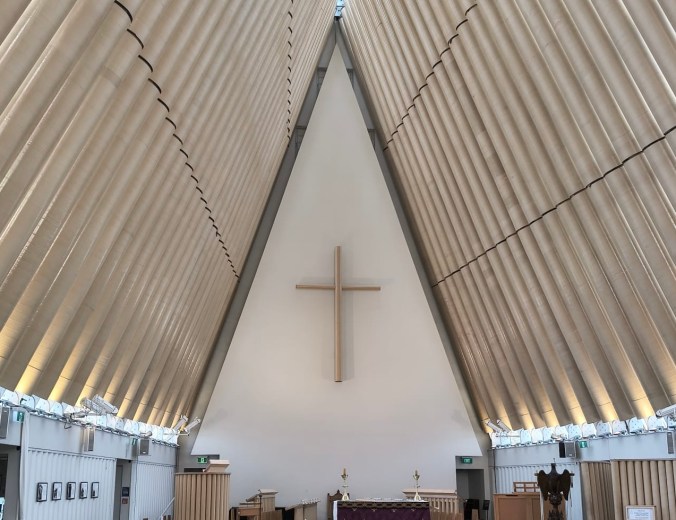
Slowing to see. . .

Recently I’ve been thinking about our world and the suffering which surrounds us. I long to see wars cease, poverty end, and those in pain made whole. I know this is huge and not within my power or remit, yet the longing remains. I want to see peace!

I pray, and God whispers the same old question in my ear. ‘Do you trust me? Trust him? Of course, I do. Or at least I want to…. I know that he cares for me, that he cares for everyone in this world.

            But I want to see change and I tell him so. Frank words flow from my cerebral mind; words firmly lodged in my head which don’t seem to fall into my heart. As those words slow and become simpler, I grasp hold of a portion of the Lord’s prayer or a line of scripture. Very often, I simply speak the name of Jesus out loud.

I want prayer to dwell in my being. But for that to be reality, I must be quiet and still, and that doesn’t come quickly or easily to me. I need to listen attentively with my whole being, open my heart to him and let his Spirit reign in me. I have experienced this and there have been places where I’ve felt able to relate to God more comfortably, such as sitting in an old chair taking in a breathtaking view or stopping in the forest to listen to a woodpecker tap away at the bark of a tree. Those places seem to welcome my presence, allowing me to sense God close. But I don’t live in those places. I live in the messy hustle and bustle of everyday life, trying to balance a full schedule with times of quietness, trying to prayer when my mind is distracted by a thousand thoughts and tasks.

            ‘Just be with Jesus,’ a friend said. ‘Speak to him in your own way.’ Words easily spoken, but far harder to live out. In the busyness, I take a step towards God, realising that he desires connection amid the chaos of community.

I want to understand God and the situations I live in more deeply. However, I am beginning to see that he is more interested in my openness to him rather than in me gaining knowledge, for he desires to plant his word in me. For a moment I wait. Silent, learning to be patient and with Jesus, I quietly observe him at work in the world and my life.

Slow and, at times, painful, this is the journey of following God. Sometimes I fail, other times his grace, enables me to obey, rarely am I completely faithful. But I draw closer and pray. Revelation comes, uncovering what was covered to my eyes, dispelling illusions and enabling me to be honest with him and myself. He begins to speak and nurture me, bringing a peace and a hunger for more of God.

In our world of change and pain, he is constant, our immovable anchor, steadfast and sure. I cannot change this world. But the truth is: I can, by God’s grace, bring his light and peace into the situations where he allows me to have influence.

© copyright Gillian Newham 2026
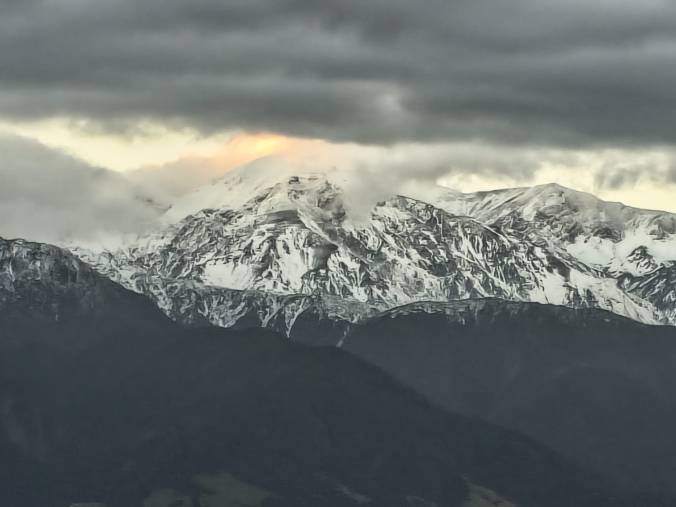
It’s Christmas. . .

The wind howled, hurling rain against my window like miniature torpedoes. I watched the trees bend and swirl in the storm’s grip. Warm and cosy inside, it was easy to dream of climbing to the top of the tree in our neighbour’s garden to observe the storm like John Muir, the American naturalist, had once done.

            Not that I’m tree climber, but something about nature’s wildness draws me. Perhaps it’s because I lived in a vast, remote and formless land for many years? I am not sure. While I am fascinated by nature’s power, I also recognise that the earth’s wild side is dangerous. Beyond our control, its activities are often unpredictable. It can cause harm, destruction and loss of life. But in those terrifying moments, I find myself appreciating something of the awful majesty of God.

            There are so many ways in which God displays his majesty, sometimes quietly, sometimes loudly. Recently, I’ve been pondering Jesus’ birth and entrance into our world. John’s words in the beginning of his gospel capture something of the enormity of what happened. In the beginning was the Word, and the Word was with God.

            The truth is profound; Jesus was with God in the beginning. In the form of a man, he came to earth as God’s word, full of truth and grace, the one who is the source of life and light for humanity. What a devastatingly beautiful expression of God’s presence with us.

            Jesus’ arrival on earth came with no spectacular or dreadful displays of power. Yet his birth in a mean stable was an entrance into human history as earth shattering as any storm or quake, for he came to turn our world’s values upside down. The ordinariness of Jesus’ birth hid the extraordinary nature of the gospel, its true life-changing power and life-transforming quality, for he came to seek the lost and broken. With self-emptying humanity, his life shone in the dark places. He opened the way for our return to God, he redeemed us from sin, fear and weakness and brought hope to our hopelessness.

His parents Mary and Joseph, just ordinary folk, played their part in God’s plan. We know the story well. Young Mary, listened to God, received his word and accepted his will. When the angel of God approached Joseph, his response was similar, he too accepted God’s will and obeyed. What a singular example of trust in God: ordinary lives, transfused with the supernatural. The work of God, unfathomable, unconventional and perhaps a little wild, accomplished through the common stuff of man and woman. This is the wonder of Christmas.

Like a whisper on the wind, God rent the heavens and came, calling us to embrace him and the adventure of life with him. Calling us to live in extravagant obedience as we love him and one another, allowing him to turn our world upside down.

© copyright Gillian Newham 2025

Friendship. . .

Two close friends recently died. The one often drove me to my knees as he revealed my impatience, while the other spoke great words of wisdom during times of uncertainties. Both are with the Lord now, and both were a gift to my life. I grieve the loss of them, aware that each unique relationship brought out a different aspect of me which isn’t easily replaceable.

The loss of friends, and our local church’s focus on friendship with Jesus and one another has caused me to pay closer attention to those around me.

We live in a small, friendly town where people greet one another in the street and pass the time of day with their neighbours. The town’s social calendar is full of activities and events; residents work together for a cause or a common goal, and there is no shortage of things to do. I am sure some of these connections go deeper than superficial courtesy, yet I still see lonely people with little emotional connection.

In my mind, true friendship diminishes that sense of alone-ness in us. Admittedly, friendships usually grow slowly, often starting with an aha moment when we realise that we have something in common with another and that maybe, we are kindred spirits. Of course, that’s a beginning which requires us to intentionally set time aside to deepen our relationship with that person.

For Christians, friendship with God and one another other is at the heart of the gospel and our faith. The Bible tells us that we are made in the image of God who already coexists in deep friendship with his Son and the Holy Spirit. I can’t quite fathom that but intuitively know it is true because by an act of love, Jesus became human and entered our lostness so that we might be his friend.

Jesus’ love and friendship is my example. I want to be a friend like that, although I frequently fall short as my husband knows. Yet I am daily thankful for God’s grace and for my godly friends who do not judge me, or confront my faults, but rather lovingly hold me accountable to God.

Believing the best, their love pardons me and instils courage in my heart to live by God’s mercy. His mercifulness permeates my life, enabling me to be honest, vulnerable and not become disillusioned when I fail. God knows me as do my friends. They are under no illusions as to who I am. Not only that, but they know Christ in me and, somehow grasping that unseen reality together, we understand that Christ inhabits the space between us.

Whether friendships cross cultures or classes, getting to know another person is a journey of learning to celebrate our differences and rejoice in the richness they bring. I am thankful for friends who have passed and for those here now as I pray: ‘Lord, enable me to be a good friend to those around me and to you.’

© copyright Gillian Newham 2025

Learning to be quiet . . .

I am struck by the noisiness of society and the constant stimulation that bombards our lives. Technology for example, such a wonderful and useful tool, yet it can also be a distraction. Then there is work or ministry, both of which can consume us as we seek to meet deadlines and needs.

Yet the most disruptive noise comes from the thoughts that race around my mind. The expectations I imagine others have of me, or the expectations I have of myself. You know them, those nagging thoughts that speak concerns and worries into my day and leave me drained, empty and wanting to run. 

At such times I remember Elijah; a man who followed God and fulfilled his will in the most extraordinary ways. That is, he did until Jezebel announced her intentions to kill him. Jezebel’s words captured Elijah and caused him to run for the hills. It amazes me how vulnerable Elijah was, although I am equally surprised how vulnerable I am. Fears overtake me too, wearying me as they lead my mind down inane paths that distort truth.

This is usually when I cry out to God, and he comes. Not with a rebuke, but with a quietness that stills my heart and restores me, until he finally instructs me to return.

I desire to follow God, to be able to wait on him and hear his still small voice more. To do so, I need to unplug technology, withdraw from noise and interrupt the cycle of busyness so that I can sit in his presence and listen.

Jesus did this. He spent time with his Father, and he also recognised that his disciples needed to do the same. When they returned from their first ministry trip, at a similar time as John the Baptist’s was murdered, the disciples shared the wonder of all that had been done and taught. Jesus’ response was to take them to a quiet place to rest. Naturally, things didn’t go according to plan, a crowd followed them and eventually those people needed feeding.

After everyone had eaten, and before Jesus dismissed the crowd, he sent his disciples off in a boat. He wanted them to experience quietness, rest and restoration. He knew them so well. He knows us so well. While we might be unaware of the weight we work or minister under, God knows. He also knows the toll it takes on us, and the way our passion and energy can be dissipated even though we persevere on. Often, these are the moments when he wants us slow down and be quiet.

Sometimes we experience resistance to quietness, I think that’s normal, as there seemed to be little support of it in popular western culture. It is a discipline; one I’m relearning and one without which I would not easily stop. Taking a few minutes to be quiet and let God still my heart amid the busyness, allows him to speak into my innermost being. This not only strengthens me to fulfil the work, but ultimately it also fulfils the deepest longing of my life too; the longing to know that I am known, loved and totally accepted by God as I am.

For God alone, O my soul, wait in silence, for my hope is from him. He only is my rock and my salvation, my fortress: I shall not be shaken.’ Psalm 62:5-6.

© copyright Gillian Newham 2025

‘The Lord bless you and keep you….’  

The Abbey stands on a steep hill surrounded by the River Avon. In the golden sunlight it sits, comfortable and still in this quiet leafy English town. Yet, despite its ease, the Abbey has endured many long winters and seen many battles. Clothed with shabby grandeur, the scarred building publicly displays its history.

Open most days of the year, it attracts many visitors as well as hosting countless services and activities. And, for the moment, it is the place where we join other Christians to worship God. Being a part of the abbey is an interesting learning experience for us, and one that often prompts me to research different aspects of the Anglican tradition.

Each service generally finishes with a blessing, which made me ask, ‘Why, do we do that?’  The question sent me to the Old Testament, to the well-known blessing or benediction which the Lord spoke to Moses who shared it with Aaron.

Members of the clergy here sometimes speak of the blessing as a ‘benediction,’ which leaves me wondering what that word means exactly. The dictionary definition says, ‘to speak well of.’  My thoughts meander towards Genesis where God spoke well of his creation; it was good, and he delighted in it. Then I remembered the Old Testament fathers who, before dying, blessed their children, hopeful that they would live well and prosper, although such fathers usually endowed their children with the ability to fulfil that blessing.

But this isn’t only a parent’s heart for their children, but a reflection of God’s greater heart for us. He delights in us and promises to be with us all the days of our life. Included in his blessing lie the means for us to flourish and live well.

What an amazing gift, as vital in today’s world as it was in the beginning. Each one of us needs to know that we are worthy and that God delights in us. When we cry out to him, he comes speaking his love for us with such affirming assurance that we know we are accepted.

His face shines on us, I imagine that is the moment we realise God stands, turned towards us, drawing us close to reveal his presence and his joy. Attentive to his word, we realise the truth: we are beloved. His eye is on us and, if we allow him to guide us, a conversation begins which grows a deepening relationship with him. That blessing changes my life.

God has named me, and I carry his name in my heart. No longer alone, I have been adopted into his family and gifted with a new growing identity. I have security and intimacy with Jesus which, even when I sin, remains constant. The constancy of his loves increases my desire to grow in loving him.

Perhaps that’s why services conclude with a blessing just like Aaron concluded services in the tabernacle with the Israelites. We walk out of the church door, knowing we are valued, loved, and belong to Christ. And perhaps he desires that we pass the blessing we have received on to others, pointing them to the one true source of all blessing.

‘…the Lord lift up his countenance upon you and give you peace.’

© copyright Gillian Newham 2025

Nomads. . .

Nomads have a way of getting under your skin, well they have got under mine. Aspects of their lives fascinate me and point me to God.

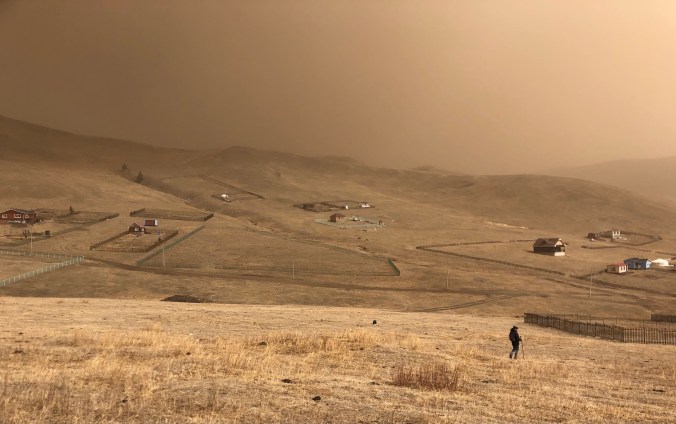
Living in tents in the big landscape of steppe and desert, under a domed sky, their souls seem to possess a fluidity that requires no permanent, settled home. Like rod and staff, the beauty and gritty harshness of the land keeps them in step with the seasons. On the cusp of each, when the weather edges towards change, nomads move to the next place, leaving behind them fewer traces of their presence than we who live in settled homes. Travelling light, they carry their lives and traditions with them.

Historically, they have been epic story tellers. In years gone by storytellers used to travel from ger to ger telling tales to all who would listen. Sadly, these storytellers no longer exist in the same way as they once did, although everyone still loves to hear a parent or grandparent tell tales of life on the steppe or a brave man defeating an arch enemy.

Remembrance of the old stories anchors nomads to their place as they live with nature. It used to be that they did not try to change or crush their environment, but progress has enlightened people to the value of the resources that lie beneath their feet.

Mongolian nomads still possess that essential sense of freedom and curiosity which keeps them reaching forward and pushing man-made boundaries to embrace the unfamiliar. Adaptable, they are proudly independent and yet mutually dependent on one another.

Living in wild, remote locations, I’ve heard the Mongolians call themselves the people of felt walls as they live without high fences or secure gates to protect them. Largely, they dwell secure, facing dangers with courage, held by the bonds that exist between them. Usually familial, although neighbours and friends come close too, each knows that they cannot survive or flourish in Mongolia’s tough environment without one another.

Relationships aren’t always harmonious. When are they ever? But nomads do share a common belief in life’s purpose and a devotion to one another that strengthens them to overcome the gritty reality of life on the steppe. They have lived their lives on the move, but change is coming. Disheartened with the hardness of life and losses they have endured, some have become city dwellers who enjoy settled lives. They now live in apartments, but usually they are still full of a nomadic spirit that longs to look over the next hill.

Neither way of life is right or wrong; they are just different. Our world needs nomads and as well as those who are settled. Yet, there remains something in the movement of the nomads, their light travel and the community which they inhabit that speaks to me. They remind me of our journey with God, our need to trust in Him and, in our seemingly harsh world, to trust one another.  

© copyright Gillian Newham 2025