On my desk I have a photo of my mother’s parents’ wedding. Its black and white image is rich with detail. Great Aunt Grace is seated next to Aunt Elise neither of whom, so word has it, ever spoke to each other from one year’s end to the next and yet here they are seated together. On the back row Uncle Noah, the family comedian, grins warmly while the bride and groom look demure and my grandfather, holding his gloves in his hand, looks rather dapper. He always was a snazzy dresser with his navy blazer, white shirts and gold cufflinks. The two small children seated on the floor below look like butter wouldn’t melt in their mouths.
The photo is over a hundred years old and yet it links me to great uncles and aunts I’ve never met.  However when my father died, nearly thirty years ago, I learned that my mother had been adopted. Such news explained so many mysteries but it also left so many questions unanswered. Who were my real grandparents, aunties and uncles? Of course there was no way to find answers to those questions but it made me realise how important it is to know that we belong.
Mongolian friends often make us smile when introducing us to a new family member. “This is my father’s older brother’s sister-in-law,” they say and, raising our eyebrows, we think surely that’s no relative at all. Despite having nomadic spirits, knowing where you belong is very important to the Mongolians. Children, parents and even distant relatives, no matter how tenuous the connection may appear to us, are all linked. They belong to one another and this belonging inexorably links their lives into an elaborate web of complex relationships.
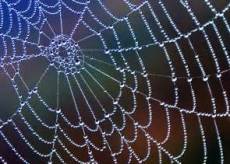 But the threads that bind us in families can sometimes appear as delicate and fine as a spider’s web suspended between two trees. Mostly, invisible to the eye we only see it when the shimmering sun illuminates the gossamers. Or the rain or dust weighs down the supple strands. Often, we pass by without even noticing until we find minute threads clinging to our clothes.
Families are like that, intricately spun, lacing us into roles that never change. We are always a son, or a niece, an uncle or a mother. Families give us times of sublime delight and chest-expanding pride but they also make us cry and break our hearts and yes, cause us to experience every shade of emotion in between. Sometimes we boast of them and sometimes we want to deny any connection to them. But like it or not, adopted or natural born, we are in a family and the ties that bind us are as strong as steel, integrally connecting us to parents, siblings and, dare I say, all those eccentric aunties and uncles.
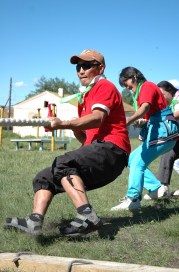 The richness of our families so often mirrors the family that God births Christians into. There are plenty of interesting characters in His family. But if we are in Christ then they all become our brothers and sisters, aunties and uncles. Many of them are easy to love and respect but there are some whose sharp personalities, actions and opinions just don’t fit with our personality and leave us never wanting to speak to them again. Yet as Christians, for better or worse, we are in God’s family, we are a brother or sister, an older or younger member. And God calls us to love those in His family, even the strange one with all their faults and idiosyncrasies, and in loving them we soon learn that we too have plenty of faults and idiosyncrasies ourselves.
 Nomadic Pages
We enjoy reading your thoughtful blogs and are amazed at how often you echo things going on over here. God is faithful to take us forward in the every day challenges because He is determined to make us gold right through to the centre . He’s not satisfied with gold plate that scratches and can be scraped off
Love to you both
LikeLike
Bev, thanks for your kind reply. It was great to be able to chat with you at Epsom, that is one of those conversations I cherish.
LikeLike