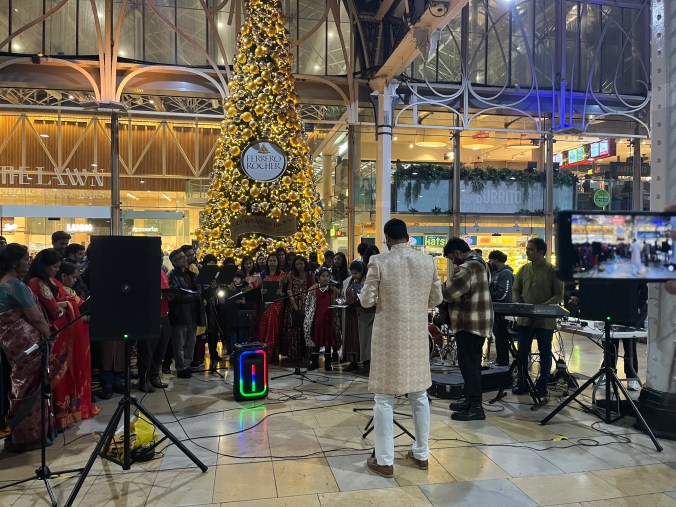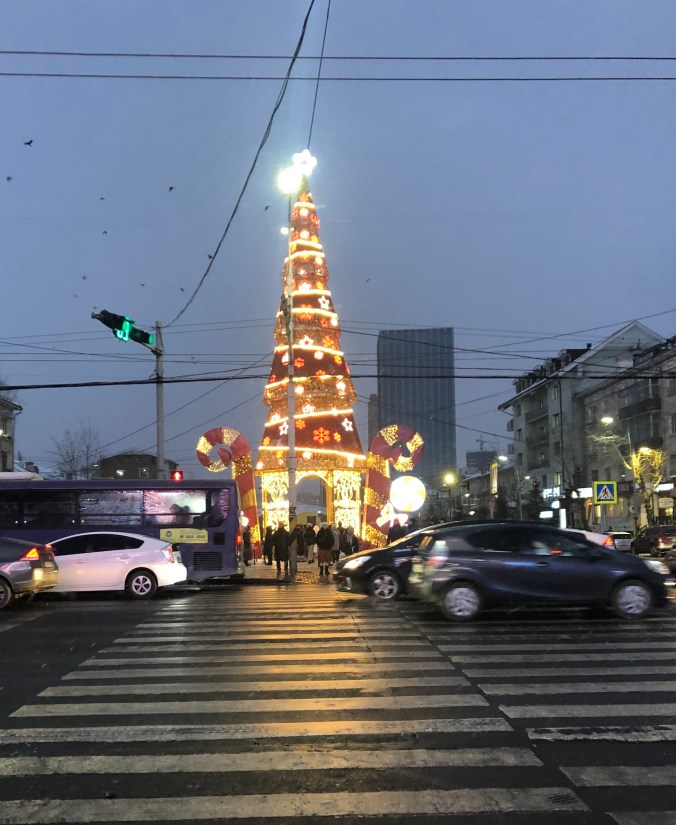
It’s Christmas. . .

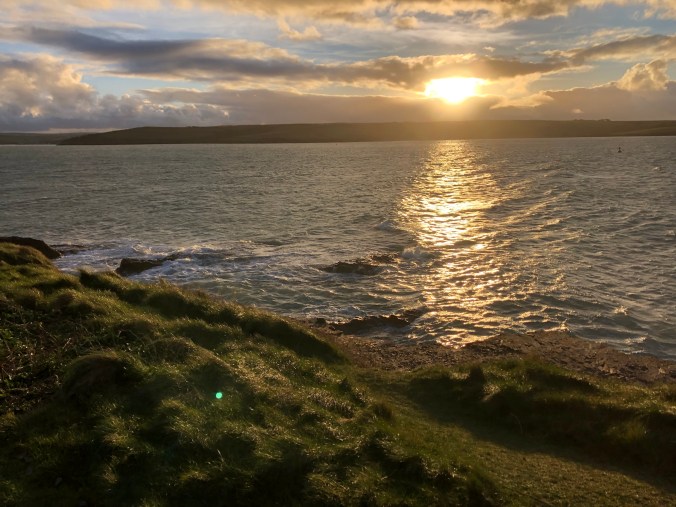
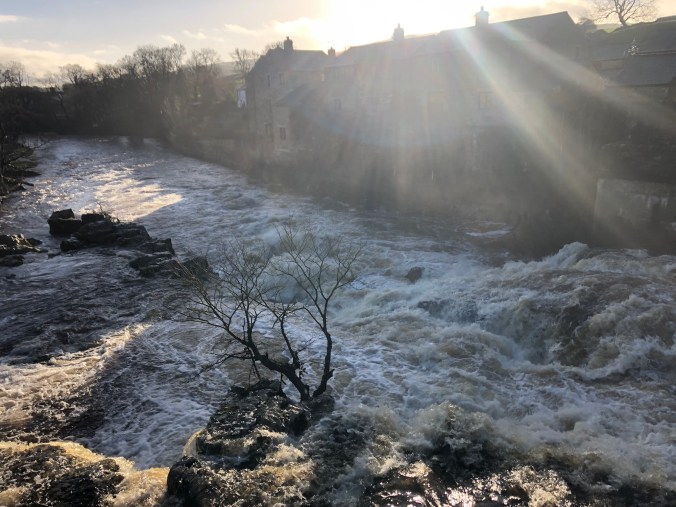
The wind howled, hurling rain against my window like miniature torpedoes. I watched the trees bend and swirl in the storm’s grip. Warm and cosy inside, it was easy to dream of climbing to the top of the tree in our neighbour’s garden to observe the storm like John Muir, the American naturalist, had once done.

            Not that I’m tree climber, but something about nature’s wildness draws me. Perhaps it’s because I lived in a vast, remote and formless land for many years? I am not sure. While I am fascinated by nature’s power, I also recognise that the earth’s wild side is dangerous. Beyond our control, its activities are often unpredictable. It can cause harm, destruction and loss of life. But in those terrifying moments, I find myself appreciating something of the awful majesty of God.

            There are so many ways in which God displays his majesty, sometimes quietly, sometimes loudly. Recently, I’ve been pondering Jesus’ birth and entrance into our world. John’s words in the beginning of his gospel capture something of the enormity of what happened. In the beginning was the Word, and the Word was with God.

            The truth is profound; Jesus was with God in the beginning. In the form of a man, he came to earth as God’s word, full of truth and grace, the one who is the source of life and light for humanity. What a devastatingly beautiful expression of God’s presence with us.

            Jesus’ arrival on earth came with no spectacular or dreadful displays of power. Yet his birth in a mean stable was an entrance into human history as earth shattering as any storm or quake, for he came to turn our world’s values upside down. The ordinariness of Jesus’ birth hid the extraordinary nature of the gospel, its true life-changing power and life-transforming quality, for he came to seek the lost and broken. With self-emptying humanity, his life shone in the dark places. He opened the way for our return to God, he redeemed us from sin, fear and weakness and brought hope to our hopelessness.

His parents Mary and Joseph, just ordinary folk, played their part in God’s plan. We know the story well. Young Mary, listened to God, received his word and accepted his will. When the angel of God approached Joseph, his response was similar, he too accepted God’s will and obeyed. What a singular example of trust in God: ordinary lives, transfused with the supernatural. The work of God, unfathomable, unconventional and perhaps a little wild, accomplished through the common stuff of man and woman. This is the wonder of Christmas.

Like a whisper on the wind, God rent the heavens and came, calling us to embrace him and the adventure of life with him. Calling us to live in extravagant obedience as we love him and one another, allowing him to turn our world upside down.

© copyright Gillian Newham 2025

Friendship. . .

Two close friends recently died. The one often drove me to my knees as he revealed my impatience, while the other spoke great words of wisdom during times of uncertainties. Both are with the Lord now, and both were a gift to my life. I grieve the loss of them, aware that each unique relationship brought out a different aspect of me which isn’t easily replaceable.

The loss of friends, and our local church’s focus on friendship with Jesus and one another has caused me to pay closer attention to those around me.

We live in a small, friendly town where people greet one another in the street and pass the time of day with their neighbours. The town’s social calendar is full of activities and events; residents work together for a cause or a common goal, and there is no shortage of things to do. I am sure some of these connections go deeper than superficial courtesy, yet I still see lonely people with little emotional connection.

In my mind, true friendship diminishes that sense of alone-ness in us. Admittedly, friendships usually grow slowly, often starting with an aha moment when we realise that we have something in common with another and that maybe, we are kindred spirits. Of course, that’s a beginning which requires us to intentionally set time aside to deepen our relationship with that person.

For Christians, friendship with God and one another other is at the heart of the gospel and our faith. The Bible tells us that we are made in the image of God who already coexists in deep friendship with his Son and the Holy Spirit. I can’t quite fathom that but intuitively know it is true because by an act of love, Jesus became human and entered our lostness so that we might be his friend.

Jesus’ love and friendship is my example. I want to be a friend like that, although I frequently fall short as my husband knows. Yet I am daily thankful for God’s grace and for my godly friends who do not judge me, or confront my faults, but rather lovingly hold me accountable to God.

Believing the best, their love pardons me and instils courage in my heart to live by God’s mercy. His mercifulness permeates my life, enabling me to be honest, vulnerable and not become disillusioned when I fail. God knows me as do my friends. They are under no illusions as to who I am. Not only that, but they know Christ in me and, somehow grasping that unseen reality together, we understand that Christ inhabits the space between us.

Whether friendships cross cultures or classes, getting to know another person is a journey of learning to celebrate our differences and rejoice in the richness they bring. I am thankful for friends who have passed and for those here now as I pray: ‘Lord, enable me to be a good friend to those around me and to you.’

© copyright Gillian Newham 2025

Learning to be quiet . . .

I am struck by the noisiness of society and the constant stimulation that bombards our lives. Technology for example, such a wonderful and useful tool, yet it can also be a distraction. Then there is work or ministry, both of which can consume us as we seek to meet deadlines and needs.

Yet the most disruptive noise comes from the thoughts that race around my mind. The expectations I imagine others have of me, or the expectations I have of myself. You know them, those nagging thoughts that speak concerns and worries into my day and leave me drained, empty and wanting to run. 

At such times I remember Elijah; a man who followed God and fulfilled his will in the most extraordinary ways. That is, he did until Jezebel announced her intentions to kill him. Jezebel’s words captured Elijah and caused him to run for the hills. It amazes me how vulnerable Elijah was, although I am equally surprised how vulnerable I am. Fears overtake me too, wearying me as they lead my mind down inane paths that distort truth.

This is usually when I cry out to God, and he comes. Not with a rebuke, but with a quietness that stills my heart and restores me, until he finally instructs me to return.

I desire to follow God, to be able to wait on him and hear his still small voice more. To do so, I need to unplug technology, withdraw from noise and interrupt the cycle of busyness so that I can sit in his presence and listen.

Jesus did this. He spent time with his Father, and he also recognised that his disciples needed to do the same. When they returned from their first ministry trip, at a similar time as John the Baptist’s was murdered, the disciples shared the wonder of all that had been done and taught. Jesus’ response was to take them to a quiet place to rest. Naturally, things didn’t go according to plan, a crowd followed them and eventually those people needed feeding.

After everyone had eaten, and before Jesus dismissed the crowd, he sent his disciples off in a boat. He wanted them to experience quietness, rest and restoration. He knew them so well. He knows us so well. While we might be unaware of the weight we work or minister under, God knows. He also knows the toll it takes on us, and the way our passion and energy can be dissipated even though we persevere on. Often, these are the moments when he wants us slow down and be quiet.

Sometimes we experience resistance to quietness, I think that’s normal, as there seemed to be little support of it in popular western culture. It is a discipline; one I’m relearning and one without which I would not easily stop. Taking a few minutes to be quiet and let God still my heart amid the busyness, allows him to speak into my innermost being. This not only strengthens me to fulfil the work, but ultimately it also fulfils the deepest longing of my life too; the longing to know that I am known, loved and totally accepted by God as I am.

For God alone, O my soul, wait in silence, for my hope is from him. He only is my rock and my salvation, my fortress: I shall not be shaken.’ Psalm 62:5-6.

© copyright Gillian Newham 2025

‘The Lord bless you and keep you….’  

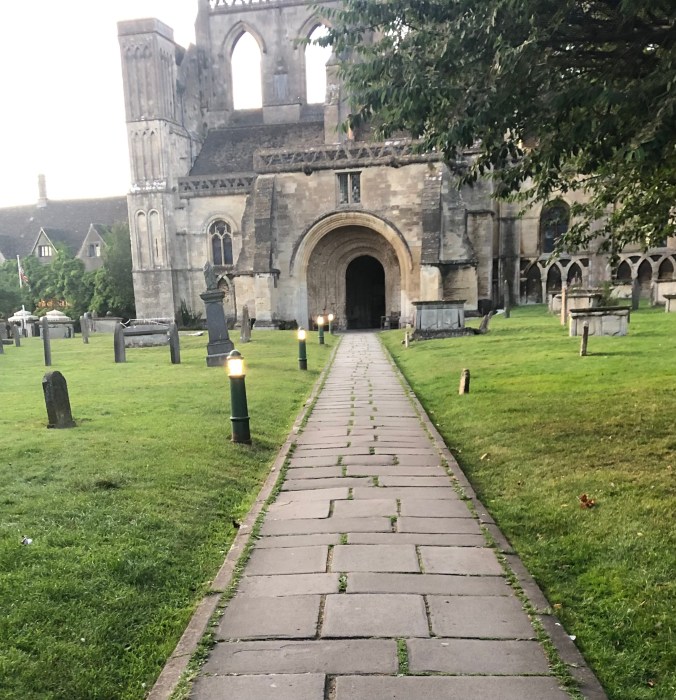
The Abbey stands on a steep hill surrounded by the River Avon. In the golden sunlight it sits, comfortable and still in this quiet leafy English town. Yet, despite its ease, the Abbey has endured many long winters and seen many battles. Clothed with shabby grandeur, the scarred building publicly displays its history.

Open most days of the year, it attracts many visitors as well as hosting countless services and activities. And, for the moment, it is the place where we join other Christians to worship God. Being a part of the abbey is an interesting learning experience for us, and one that often prompts me to research different aspects of the Anglican tradition.

Each service generally finishes with a blessing, which made me ask, ‘Why, do we do that?’  The question sent me to the Old Testament, to the well-known blessing or benediction which the Lord spoke to Moses who shared it with Aaron.

Members of the clergy here sometimes speak of the blessing as a ‘benediction,’ which leaves me wondering what that word means exactly. The dictionary definition says, ‘to speak well of.’  My thoughts meander towards Genesis where God spoke well of his creation; it was good, and he delighted in it. Then I remembered the Old Testament fathers who, before dying, blessed their children, hopeful that they would live well and prosper, although such fathers usually endowed their children with the ability to fulfil that blessing.

But this isn’t only a parent’s heart for their children, but a reflection of God’s greater heart for us. He delights in us and promises to be with us all the days of our life. Included in his blessing lie the means for us to flourish and live well.

What an amazing gift, as vital in today’s world as it was in the beginning. Each one of us needs to know that we are worthy and that God delights in us. When we cry out to him, he comes speaking his love for us with such affirming assurance that we know we are accepted.

His face shines on us, I imagine that is the moment we realise God stands, turned towards us, drawing us close to reveal his presence and his joy. Attentive to his word, we realise the truth: we are beloved. His eye is on us and, if we allow him to guide us, a conversation begins which grows a deepening relationship with him. That blessing changes my life.

God has named me, and I carry his name in my heart. No longer alone, I have been adopted into his family and gifted with a new growing identity. I have security and intimacy with Jesus which, even when I sin, remains constant. The constancy of his loves increases my desire to grow in loving him.

Perhaps that’s why services conclude with a blessing just like Aaron concluded services in the tabernacle with the Israelites. We walk out of the church door, knowing we are valued, loved, and belong to Christ. And perhaps he desires that we pass the blessing we have received on to others, pointing them to the one true source of all blessing.

‘…the Lord lift up his countenance upon you and give you peace.’

© copyright Gillian Newham 2025

Nomads. . .

Nomads have a way of getting under your skin, well they have got under mine. Aspects of their lives fascinate me and point me to God.

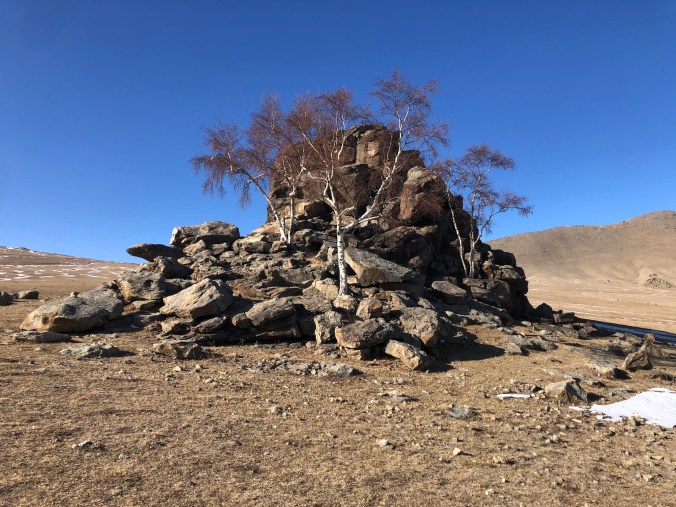
Living in tents in the big landscape of steppe and desert, under a domed sky, their souls seem to possess a fluidity that requires no permanent, settled home. Like rod and staff, the beauty and gritty harshness of the land keeps them in step with the seasons. On the cusp of each, when the weather edges towards change, nomads move to the next place, leaving behind them fewer traces of their presence than we who live in settled homes. Travelling light, they carry their lives and traditions with them.

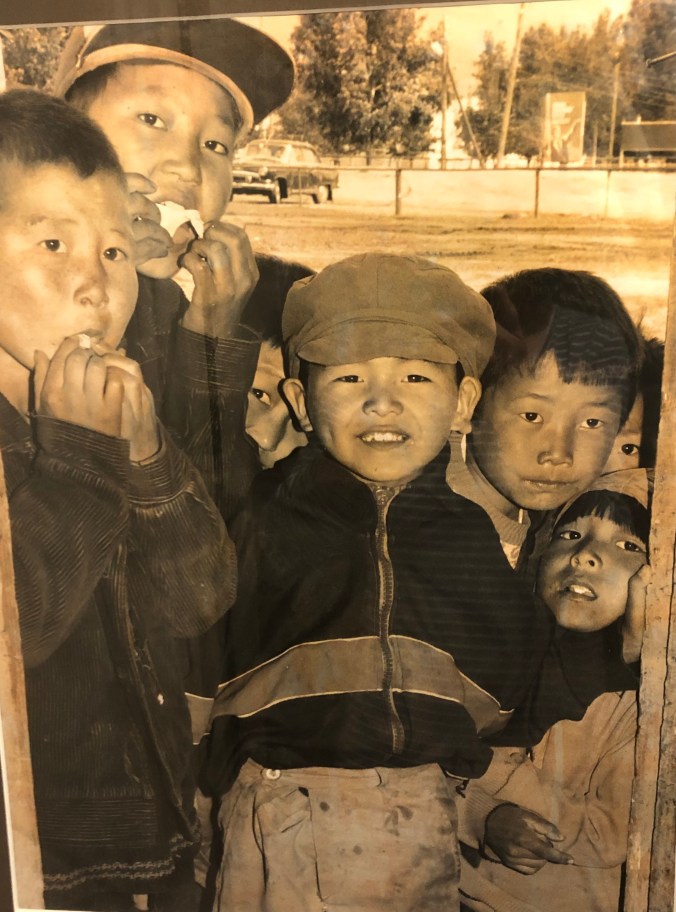
Historically, they have been epic story tellers. In years gone by storytellers used to travel from ger to ger telling tales to all who would listen. Sadly, these storytellers no longer exist in the same way as they once did, although everyone still loves to hear a parent or grandparent tell tales of life on the steppe or a brave man defeating an arch enemy.

Remembrance of the old stories anchors nomads to their place as they live with nature. It used to be that they did not try to change or crush their environment, but progress has enlightened people to the value of the resources that lie beneath their feet.

Mongolian nomads still possess that essential sense of freedom and curiosity which keeps them reaching forward and pushing man-made boundaries to embrace the unfamiliar. Adaptable, they are proudly independent and yet mutually dependent on one another.

Living in wild, remote locations, I’ve heard the Mongolians call themselves the people of felt walls as they live without high fences or secure gates to protect them. Largely, they dwell secure, facing dangers with courage, held by the bonds that exist between them. Usually familial, although neighbours and friends come close too, each knows that they cannot survive or flourish in Mongolia’s tough environment without one another.

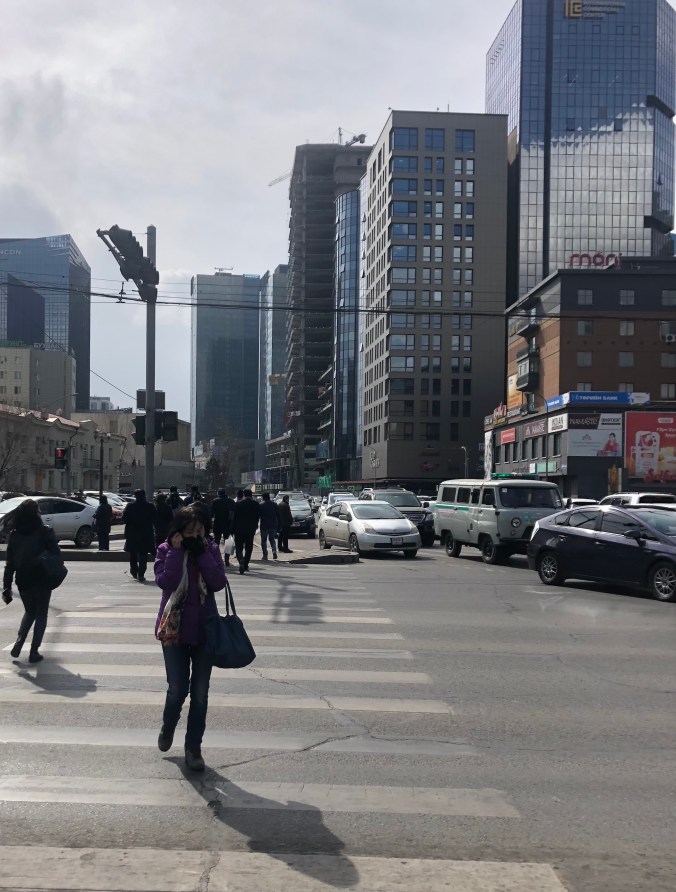
Relationships aren’t always harmonious. When are they ever? But nomads do share a common belief in life’s purpose and a devotion to one another that strengthens them to overcome the gritty reality of life on the steppe. They have lived their lives on the move, but change is coming. Disheartened with the hardness of life and losses they have endured, some have become city dwellers who enjoy settled lives. They now live in apartments, but usually they are still full of a nomadic spirit that longs to look over the next hill.

Neither way of life is right or wrong; they are just different. Our world needs nomads and as well as those who are settled. Yet, there remains something in the movement of the nomads, their light travel and the community which they inhabit that speaks to me. They remind me of our journey with God, our need to trust in Him and, in our seemingly harsh world, to trust one another.  

© copyright Gillian Newham 2025

Spring’s Abundance. . .

The austerity of the winter is a fading memory. Gone are the days of bare trees and the absence of tiny creatures from wood and field. Light has come and consumed the early darkness. Gloomy rain that repeatedly drenched the earth and, us too, has gone, with sunshine and warmth in its place.

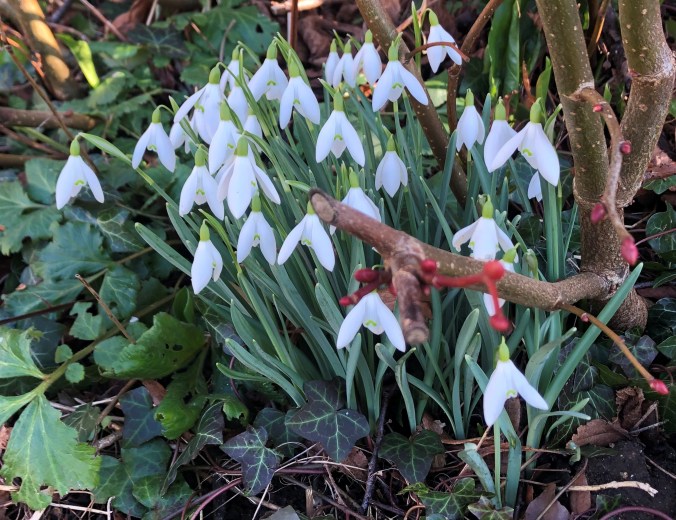
Before spring arrived I searched for signs of growth, for possibilities, but found none. Then, almost imperceptibly, the ground began to twitch and a tiny shoot, tentative yet tenacious, broke through the solid earth, unfurling itself in a delicate white bell.

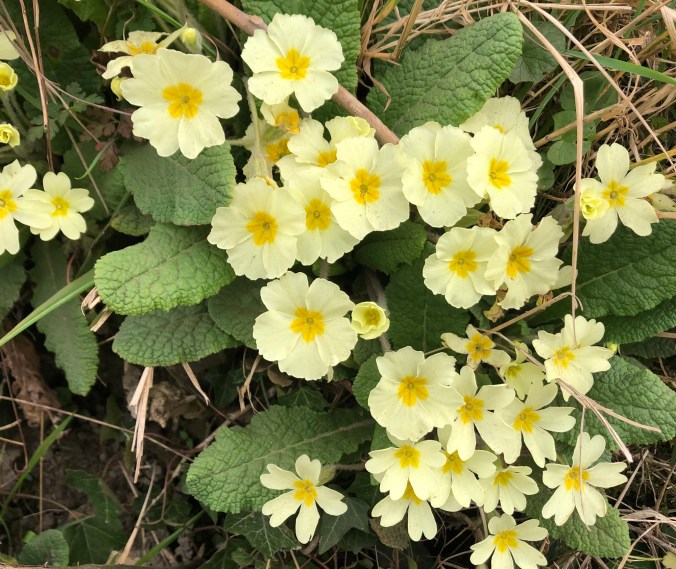
The advent of the snowdrop heralds a poignant announcement: winter is starting to pass. These small flowers, close to the ground, are a quiet beginning that speaks hope: the winter will retreat. Primrose and crocus follow, taking us forward with the promise of more to come. Yet none stay for long. Like the prelude to a grand symphony, their part is quickly played.

God’s word spoken through His creation reminds me of the hope He brings in times of bleakness. He knows me and understands that hope can dissipate in the bleak, seemingly fruitless, seasons of my life. He also knows that small signs of life give me courage.

Momentum quickens. Spring days are longer and warmer. The monochrome of winter is transformed by a world awash with colour and growth. Generous abundance, lavish with extravagance has replaced restraint. Why? Perhaps for no other reason than God’s utter delight and blessing to us.

Of course, there is more to it than that. Spring is practically fertile, rhythmed with methodical and tender growth that is essential to our lives. But spring’s gift of life seems like a blessing that God shares with delight. He is not miserly. He does not conserve His resources as we might. No, He gives with joyful abandonment.

Through nature, God reinforces a principle that I want to practice. When doubt and fear overshadow me, I do not want to clutch God’s gifts tightly to my breast. Following His example, I want to give away all that He has entrusted to me, knowing that He will continue to fill me anew.

There is an elegance in spring. However, that beauty and newness did not come from nowhere. It is the consequence of a season of dormancy. Although outwardly, all appeared dead, hidden from our eyes in the darkness beneath our feet, roots have been pushing their way deeper into the earth. Winter is essential; I know that. But sometimes I forget and, bemoaning my dark wintery days, neglect the truth that God is deepening the roots of my life in Him.

© copyright Gillian Newham 2025

Wrestling with change. . .

Whenever I broach a new idea or suggest something different to my husband, Mark, it is likely that his immediate reply will be ‘No’, particularly if I catch him in an unguarded moment. After some thought his ‘No’ usually turns to a ‘Maybe’, but it certainly takes a while before his ‘Maybe’ becomes ‘Yes’.

We laugh at his predictability and joke about his resistance to new ideas and change. Yet, as I tease Mark, I realise that I am no different. Something in me also resists change. Taking a moment to reflect why this should be, I realise that my reasoning is not clear cut. Part of me wants to move forward, while part of me would rather things remain as they are.

It feels like a tug-of-war, a dichotomy which I don’t find easy to navigate. Is my oscillation just fickleness, or is there more to it than that? I cry to God and begin to sense that my resistance is real. I do want to embrace change, to be growing, particularly as a Christian. Yet I wrestle. Thoughts rumble through my mind until I see and can admit that I have expectations; expectations that change should fit neatly into my familiar framework.

But it will not! Reality dawns: I have viewed change through a lens I didn’t even know existed and that lens interprets what I perceive will happen. The lens, shaped by my past experiences and environment, distorts my expectations. Change, by its very nature, will alter life. Even though it may be foisted upon me, I can resist it or I can allow it to enter my life, but I cannot corral or control it.

The choice is mine, God will not force me forward. Ambivalent with conflicting desires, I squirm and complain. My discomfort and anxiety, even the fear I encounter in the face of the change I want to embrace, somehow cajoles me out of my inertia. This distress and vulnerability seem necessary to battling my resistance.

I call on God for help to overcome this fear of the unknown. He comes, supplying me with courage by the power of His Spirit. With my eyes focused on Him, I begin to adjust and settle, accepting that life and its circumstances are different to my expectations. As I relax and resistance dissipates, I find I can accept change. Through it I become more myself, more the person God created me to be. Calling me forward, He deepens my love for Him and those around me. Daily life is not smooth, it is bumpy with struggles which I still do not fully understand. But I recognise that wrestling is part of the pattern of life, prayer and growth.

© copyright Gillian Newham 2025

The Secret Garden. . .

I grew up in a small town on the banks of the River Severn, surrounded by villages and hamlets of black-&-white timbered houses. Each home had a garden. Most were well ordered, with manicured lawns, small formal beds and an ornamental pond. But one sticks in my mind.

In an old, rambling cottage lived an elderly couple. Their garden, to my young eyes, appeared completely overgrown. At their invitation I wandered along the weathered path that snaked through their wilderness, careful to watch my steps as each flag rocked on its mossy bed. It was a chaotic wonderland of greenery tumbling over the edges of the path. An ancient glass greenhouse sheltered beneath a fruit-laden orchard, while other trees had somehow woven themselves through a crumbling brick wall.

              The garden was crowded with large, flourishing plants. There were trailers, climbers and creepers of every shape, size and colour. Each one bold, gaudy and loud, every shape, size and colour; brimming with life as though they were all talking at once.  

              My mind has returned to that garden many times. Recently it has been in my thoughts as we settle and navigate this new season with its expanding ministry. There are moments when our uneven path feels overcrowded. Riotous, extravagant layers of colour, variety and texture explode before us, growing together seemingly without reason or rhythm.

I used to stop on that garden path and let my eyes explore. Following the colours, I could see where clumps of plants recurred in different places, and I realise now that each was in its place. Graceful hollyhocks bowed their heads alongside scented old roses, lavender and foxgloves. Clematis and honeysuckle climbed boundary walls and tall grasses swayed amongst the trees.

At the height of summer, bees flew busily from flower to flower in search of nectar and pollen. Onions, carrots and potatoes grew in their own scrap of ground, and a large earthen pot of herbs stood hard by. Densely planted, the beautiful, practical and edible dwelt together.

In the years since, I’ve began to understand something of the joyful sense of discovery which time in that garden gave me. It was a mellow place. The plants appeared at ease with one another, flowing together in what looked like an effortless whole.

Today, we take time to stop and observe the layers, rhythms and connections. We sigh, remembering the pain and decay buried in the soil that fed this verdant fruitfulness. Slowly we begin to discern God’s hand. A connection between Europe and Asia blossoms. Fruit is growing across Africa; and a trellis covers a cracked wall in the Middle East which strengthens and supports the weak.

A colourful African prayer meeting, the preaching of the gospel in the Middle East, and women feeding the hungry. This flowering is bold, creative and unique; a beautiful, fluent expression of faith we could never imagine. Our eyes wonder back and forth, trying to take in all we see, but it is impossible. There is such variety, and the growth is densely packed. Awe stills us. Then we take the next step as God grows Himself in us and cultivates His presence across this earth.

© copyright Gillian Newham 2025

Lamentations 2025

With wars, violence, plane crashes, death and poverty, the news reports are a round of calamity and disaster, particularly among the innocent. Then there’s news of friends and family; those struggling with illness, heartache and tragedy. The inventory of suffering and grief feels constant. Is our world collapsing under the weight of pain? Is God really in control?

Stubbornly, in a fit of temper and frustration, I tell God my thoughts. ‘This darkness feels absolute. You promised to be a light in the darkness and just now, I don’t see any light.’ The age-old question is on my lips, ‘Why do You allow such suffering?’ Naturally, He doesn’t answer because He desires that I trust Him. Yet, I will not release Him, and my tirade continues.  

Graciously, He listens, fully aware of how I speak when suffering breaks me. Is my desire to see our world set free from suffering and death? Absolutely! But at this moment, my expectations are unrealistic and flawed. The nature of this present world is that it has been corrupted by sin and so eventually everything, even that which is beautiful and perfect, falls apart. 

This is a solemn thought and one that could threaten to kill hope. Yet, beyond the appearance of our present reality, God is with us in the darkest moments. How many people, whether or not they believe in God, find themselves crying out to Him when faced with despair? Quite a lot, I imagine. For I have noticed that, while people might not want to hear about God, they will rarely turn away someone who offers to pray for them.

Sorrow can take us to God and if, like me, you complain, at least the complaints are prayed to Him. I am not afraid of being honest with Him because I believe He welcomes it. Plus He has a way of interrupting my onslaughts, of stripping away the words and pretence to present me with the question, ‘Do you really love me for who I am?’

The deepening of my love for God is a slow, growing relationship. Through sorrow, He draws me to Himself, showing me His grieving heart. He mourns suffering and death for He desires that all might come to know Him. Understanding a little more not only strengthens my love, but it works a new steadiness and perseverance in me which reflects His heart more closely.

Still, too many unanswered questions remain. He promises to work all things together for good to those who love Him. Yet His idea of good and mine seem poles apart. When I cannot see His perspective, I choose to return to the immutable truth: God loves us now and He always will. Nothing can shake that. Even when everything, to my eyes at least, seems wrong.

© copyright Gillian Newham 2025

Honey in the Rock . . .

On the large cinema screen the flowing folds of sculpted sand seemed to reach right into the auditorium. We watched as a family fled their persecutors and found themselves in the middle of the Gobi Desert. ‘Gobi’, in Mongolian means ‘waterless place’, and the desert is mostly waterless. It is a huge swath of land, magnificent, full of awe and splendour, but also daunting and feral, as the fleeing family found.

              With long cold winters, relentless hot summers, and springs and autumns furious with sandblasting cyclones, the Gobi is an unpredictable landscape. Yet, despite its nature, the saturated silence is not devoid of life. Hardy nomads, who know the character of the land, are at home in the wilderness. Gazelles, camels and Gobi bears flourish. There are lush valleys, shrubs and lakes. At night, the vaulted sky explodes with a thousand galaxies.

              It is a fascinating place, austere and beautiful, barren and fertile, not too dissimilar to the seasons of our lives. We all experience times of awe and wonder as well as days of heartache and desolation.

The children of Israel experienced forty years in the desert. There, God provided them with a rock of refuge. In the Gobi, spines of cliff and rock break up the sandy desert, providing shelter from sandstorms and the lethal summer heat. On a hot day the sand burns. By night the heat has dissipated, leaving the cliffs as the only warm place of refuge. The rigours of the desert push us beyond comfort to expose our vulnerabilities: frailties in our body, shortfalls in our characters and the delicacy of our faith, all of which brings us to the realisation that we cannot sustain ourselves.

The rock that God provided for the Israelites in the wilderness was Himself; a refuge, a place of safety and help. In times of despair, we too must turn to that same rock for He is the only one who can truly protect us. The Israelites’ rock was not only a shield, but it also gave them water. The sandstone of the Gobi’s rocks is often pocked with tafone, which provide a tiny cup in which to catch moisture.  

Against the extremes of the desert, water keeps us alive. But God gives us more than water. He feeds us with sustenance from the rock. He renews our strength and energy, not simply to sustain us but that we might change, that He might work something beautiful in our hearts and fill us with His goodness.

In the onslaught of the storm, bewildered and disorientated, it is great comfort to know that the rock we cling to will not crumble. That our God is a place of shelter and refuge, a door of hope and a way to experience sweetness as He works beauty in our lives. What a blessing to know that Jesus too is altogether familiar with the desert.

© copyright Gillian Newham 2025