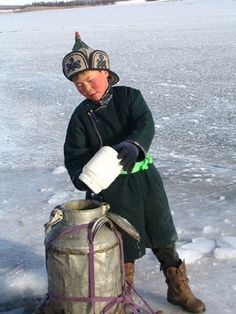
Late in the morning smoke rises from the ger close to our house and an old woman, bound in scarfs and mitts, pushes her cart towards the river. Making a hole, she’s hoping to collect a trickle of water running beneath the thickening ice. A young man passes her, bent almost double, dragging a fallen tree home for firewood.
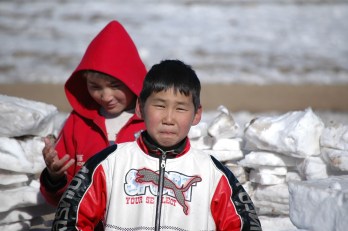 Winter is here, bringing with it the bone-chilling Siberian wind that keeps our neighbour’s outside toilet tilting closer to the ground and whips snow hard against our door. A man in the street stops for a moment to gather a handful of snow and rub it into his face. He shakes his head and, leaving me smiling, walks on.
It’s typically winter. Christmas trees even stand outside shops, while baubles, lights and Santa Claus suits entice shoppers inside. The celebrations are in full swing with shows, lunches, and parties featuring among the growing list of activities. Which is interesting considering that, apart from within the Christian church, Christmas is not officially on the Mongolian calendar.
But, like a runaway horse, the desire to celebrate moves at a pace. Perhaps the growing popularity of the New Year celebrations are spreading into December, or perhaps it’s simply because the Mongolians want to join in the fun too.
The baubles and bangles, parties and family meals certainly promote Christmas. But they don’t always illuminate the real message that lies behind the glitter: the message that is as relevant today as it has ever been; the message that God spoke and His Word became the man, Jesus Christ.
Words are usually the means we use to get to know one another. Jesus is God’s Word. A man born on earth as a babe. A tangible, historical human being. The means by which we come to know that God is true.
Hearing the deep cries of our heart, God sent his son as a vulnerable child. Jesus became one of us because He understood us. We all know that those who understand us best are those who’ve faced and walked through the same problems we’ve experienced. Jesus experienced hunger, loneliness, injustice, and betrayal and so understands our brokenness. He even understands our rejection and abandonment and knows what it is to have prayers unanswered.
He lived with us. Or to use the Bible word, tabernacled with man, which immediately sends me back to the Old Testament and the Israelites who built a tabernacle, a dwelling place for God. God resided in that tent but not in plain sight. He was hidden beyond the curtain, in the holy of holies, unseen by man.
Moses asked to see God’s glory. But God denied Moses’ request. Why? Did a fixed chasm exist between him and God? Would the sight of God and His holiness have destroyed Moses? Questions helter-skelter around my mind. There’s truth here I can’t quite see clearly. Was there a need for atonement, for the presence of the tabernacle – the place of sacrifice?
When Jesus came to earth, he dwelt, tabernacled, with us so that we might see His glory. He came to bear our sin and remove the barrier that stood between us and His Father that we might freely embrace His love for us.
Moses stood in the gap between man and God but Jesus came to close that gap. That reality is beyond fairy lights and stars, even family Christmas lunch. That reality, on a December day, is life-changing.
 With our array of unoriginal sins, challenges and heart-aches, God never pulls out a standard answer to put us in our place. Rather He speaks words tailored to catch our attention and draw us to Himself. Jesus’ two friends, Mary and Martha, remind me of this truth.
 Mary and Martha were two sisters who said the same thing to Jesus but were, in fact, very different people. Mary was possibly the quieter and humbler of the two, while Martha appears more practical and outspoken. Knowing each of them, Jesus answered the questions of their hearts.
 But that’s not the end of the story. Jesus is far more than the perfect counsellor.
 The other day, however, I’d dropped off some clothes and was turning to leave when a large poster caught my attention. Standing over a metre tall, a copy of Gustav Klimt’s, Lady in Gold, confronted me, hanging on the wall. Open-mouthed, I stared at the stylised picture of the wealthy Jewish Viennese lady, Adele Bloch-Bauer. Its rich mosaic depiction of her in oils and silver and gold leaf was positively incongruous in that over air-conditioned environment of solvents and washing machines.
 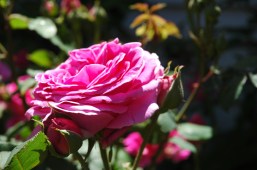 True beauty exists naturally without any additions, in an elegant rose or the ferocious fire of the sun spilling onto the ocean. It is seen on the surface and, as I take a longer look, beneath the surface; in the quiet joy behind a battered face or the unbridled laughter of a child with Down syndrome. Beauty is everywhere.
 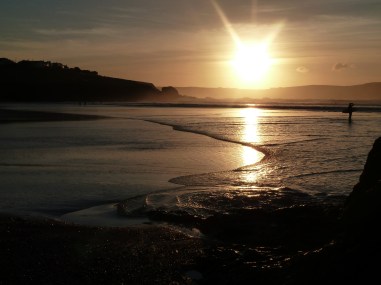 We cannot explain it, we can only perceive it. Beauty, implicit in the very fabric of creation, of this world, witnesses to the intrinsic goodness of God that’s always been there. Pressing itself to the edges of our comprehension, it is natural to the way God works in our world, in our lives. Not imposing himself on us but, stopping us in our tracks, He catches our eye, connects with our soul, and draws us in, bringing form to the formless, light to our darkness and peace to our hearts.
  In the parable of the man born blind, I seem to remember Jesus’ disciples took a similar line of questioning when they passed by the blind man. “Who sinned…” the disciples asked Jesus. “This man or his parents?”
 There’s a certain irony to the healing of the blind man in John Chapter nine. The Pharisees, with their intellectual brilliance and expertise, failed to see beyond their natural eyes. Their repeated interrogations yielded no revelations that opened their hearts and minds to the realities of their sin; and God’s grace gift, Jesus the Saviour, remained hidden to them.
 The ‘why’ questions remain unanswered. But worshipping Jesus clears my spiritual sight and brings a satisfaction that nothing else can match. And, to the degree that I’m able to give myself to God, my blindness continues being healed until I see that He, the measure of my worth, is the answer to all the questions. On the Cross my sin blinded Jesus to God, so that my spiritual blindness might be ended. He did that for me and He did that for you.
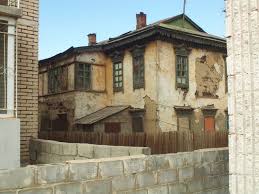 Their history is being overshadowed, swallowed up in the name of progress. Three and four storey buildings are being replaced by green and gold metallic-windowed high-rises. Steel-clad buildings and apartment blocks are reforming the Ulaanbaatar skyline. Tall cranes testify to a city undergoing change although concrete skeletons speak of those who’ve made a beginning but failed to complete their project.
 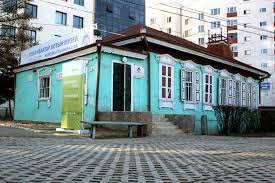 Watching Mongolia change reminds me of a danger I face in my life as a Christian. My faith in God is anchored in the ancient covenant that God fulfilled through Jesus Christ. And yet life daily throws a constant stream of new fads and trends at me, even Christian trends! Each vies for my attention, threatening to distract me and overshadow the history that shapes the precious parts of my identity in God.
 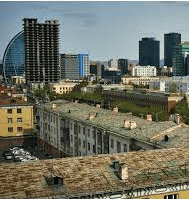 A group of young professional Mongolians are alerting society to the imminent danger they face as old buildings decay. They are calling for buildings of note to be saved and restored. Some enthusiastic entrepreneurs are even taking shabby 1960s apartment buildings, highlighting their unique features and beginning to refurbish them. Retaining their essential character, these buildings honour and celebrate the old while being fully adapted to today’s generation.
  However, Jesus’s disciples had experienced both. In chapter 6 of John’s gospel, John recounts the story of the disciples in a boat on the Sea of Galilee. Caught in the grip of a storm, they were completely powerless to escape and yet Jesus came close, not battling the storm but simply walking on the water.
 misunderstand His true personhood. He did not come to deal with Israel’s material problems. He came to give us, all of us, the bread of life and it is that life-bread that reconciles us to God.
 “Do not be afraid,” Jesus continued. I hear compassion in those words. When someone draws alongside us during the storms of life and lovingly embraces us, then it seems to enable us to keep going. Sometimes Jesus calms life’s storms and sometimes He doesn’t. But as we allow Him, He always climbs into the boat with us, entering our lives, bearing us up and, amazingly, changing us too.
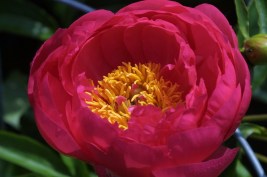 We’ve been asking what it means to adore God. In the course of our conversation we stumbled over the old word hallowed: “hallowed by thy name.” We’ve scratched our heads and wondered exactly what does that word mean?
  Have my priorities shifted? Is worry driving me to lift someone or something above my adoration of God; because Jesus teaches me that adoration, praise of God, should come before all my confessions and petitions. First and foremost, He is to be, and to remain, my beloved father.
  Adore God first I repeat, reminding myself that praising Him helps me keep Him in His rightful place and enables everything else to fit into its rightful place too.
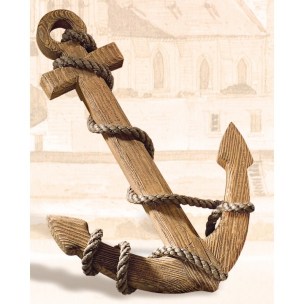 “My anchor holds within the veil,” I repeat. Since hearing the story of the ancient Mediterranean ports this line has fixed itself even more deeply in my mind. In New Testament times a huge anchor stone was sunk deep into the ground on the wharf. When ships wanted to enter the harbour a small boat, known as a forerunner, left the safety of the port, navigated its way through the hazardous waters, which the boat’s pilot knew well, and out into the open sea to the waiting ship. The pilot then took hold of the ship’s anchor rope, returned to shore and secured it to the anchor stone so that the ship could safely be brought home.
 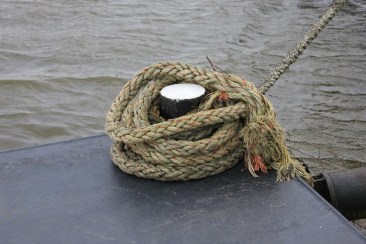 certainty. He calls me to hold fast to hope — a word which I am told, in Greek, is the same word that is used for the rope of an anchor. And just like the sailors on those ancient ships who had to abandon their oars and down sails, I too must surrender myself to the will of the forerunner and let him guide me.
 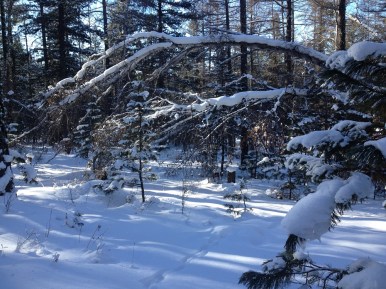 November. We’ve started taking time to sit out on a tree stump and drink our coffee. Above the trees we can see the amazing blueness of the sky, and we can hear the woodpeckers hammering on tree trunks. Small birds are returning and the tall pines are growing new needles. All around there are signs of new life, but in the midst of it all we’ve noticed that many of the silver birches are bent to the ground. Have they been weighted down with snow or damaged by the wind and ice? Or are they diseased on the inside? We don’t know but from their blackened branches and dry orange leaves they look crushed.
 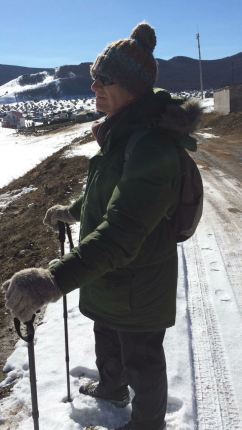 The world tells us that happiness is determined by external situations but I don’t fully believe that. When I was younger the answers to life’s problems seemed easy, more black and white, but as I get older I realise that life is more complicated. We are complex beings. The Bible tells us that man is created in the image of God. Yes! We are created in His image, fearfully and wonderfully made, people with extraordinary senses, remarkable minds that are more superior to any computer in this world and hearts that are filled with rich emotions.
 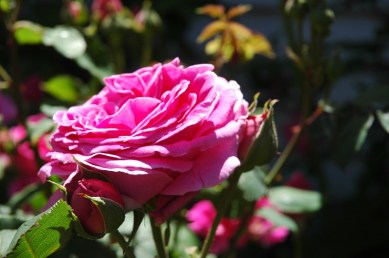 hearts of wisdom to have confidence in the complexities of life. Let’s pray that He would strengthen us in our inner beings. We are totally dependent on Him and we need a sense of Him with us. We need to be able to see Him putting His love and truth into our hearts because only God can truly fill the emptiness — He alone is the true hope of our hearts, the ultimate tree of life. Take hold of the gospel and let it work in you on the inside that we might stand upright, healthy and whole, confidence in Him.
 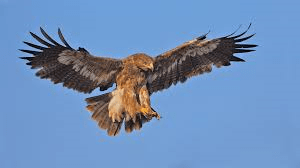 talons, possess a fierce nobility that demands respect. During the warmer months many raptors make their home on the Mongolian steppe or on its craggy peaks. Traveling in the countryside we often spot a hawk or a falcon perched on one of the white kilometre posts that mark our journey, but the sight of a small, brown steppe eagle will always cause us to put our foot on the brake.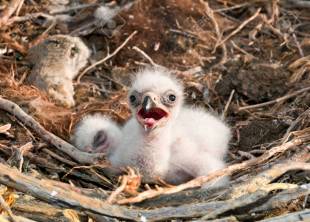
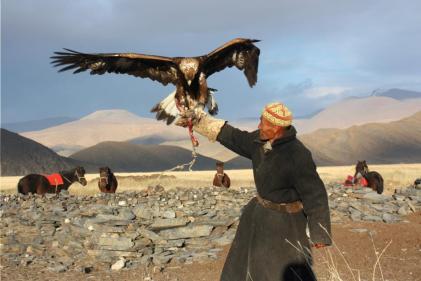 with God is so similar to that chick’s,” he says. “When I’m feeling comfortable God often comes close and begins stirring up my world until I recognise, whether I want to or not, that I must step out. Trembling, I take a shaky step and find that His presence is close, upholding me, but then He seems to distance Himself and I begin falling. I cry out and He comes, scooping me up, and letting me rest in the warmth of his closeness again. But He never lets me remain there for long. He’s always nudging me higher so that, slowly, losing my clumsy awkwardness, I learn to fly with great strength and agility and realise that I am, indeed, growing closer to God.”
 Nomadic Pages