“We used to dry beef in lengths,” said Davaajav as we sat on her sofa at home in her lounge in Arhangai. “The strips were about five or seven centimetres long and a couple of centimetres thick,” Davaajav continued, remembering her family’s time-consuming preparations for winter. “Hung on pieces of string, we dried the lengths for a month, or until they’d shrunk to the size of a small woody stick. Then we’d store them in linen bags and use them through the winter.”
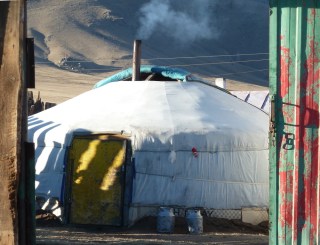 We grinned, recalling the number of times we’ve seen travelling Mongolians produce a bag containing such meat. Rubbing it between their fingers, they’d crumbled the beef onto their food, adding a tasty supplement to meatless soups and bland vegetables. Few families, particularly those in the cities, dry meat but everyone relishes the flavour.
“Summer was relaxing,” said Davaajav, “although we knew we had to think about getting ready for winter. From the forest, we’d collect wild onions, chop them finely, add aarts (soured dried milk) stir thoroughly, and then bottle them. You can’t imagine how delicious those onions made a batch of dumplings on an icy day. We also prepared and stored as much dairy as we could, stockpiled dung to fuel our stove, and cut the summer grass.”
On the drive to Arhangai, we’d passed countless small trucks piled high with grass that leant ominously towards our side of the road. Cut from agreed common ground, the grass bursts with thistles and crabgrass, dandelion, clover and rye. Sweet and rich with amino acids, it’s like a medicine that keeps the cattle healthy in the cold months.
Davaajav refilled her bowl with milk tea. “As the cold came, my father would slaughter a cow that was unlikely to make it through the winter. That cow, along with seven or eight sheep, kept us fed.
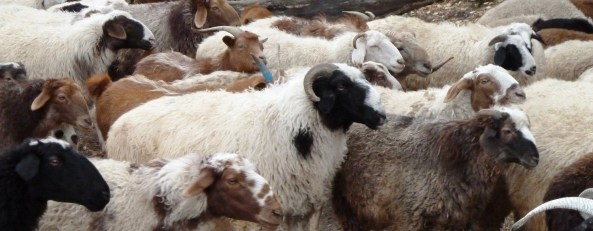
“It was a simple life. On snowless evenings, we gathered in our neighbour’s gers to play cards or ankle bones while our elders spoke of legends and old heroes. How quickly things change,” Davaajav said, wistfully.
“Change is inevitable,” we replied, aware of the rapid transitions we’ve witnessed in Mongolia.
“But not all change has real long-term benefits,” said Davaajav. “And we Mongolians do have a propensity to abandon long-practiced ways in favour of what we perceive to be progress. Look at the herders,” she said, waving her hand towards the river where many nomads live. “They have cars.”
 “Which must make life easier for them,” I added.
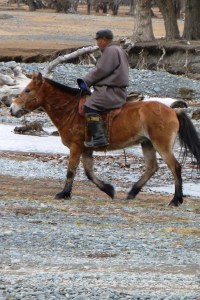
“No one is denying it makes life easier, but it also makes them lazier. Some young herder would far rather drive his expanding herd forward from the steering wheel of his car than the saddle of his horse. But sitting in his car, the herder loses the immediacy of land and his herd. If he’s perched in his saddle above the flock, a shepherd walks with his sheep, observing their health and their temperaments. He encounters the weather and sees the ground beneath his feet. He knows the dangers, and he guides his sheep to safety; to the good pasture and the place of sweet water.
“I know, we live in a developing world that we are all eager to embrace, but the car-herding herder sounds a clarion call. A young herder dreaming of owning a large herd often seeks to grow his herd quickly and neglects the true preparation necessary to care for his animals skilfully and wisely.” And that is no progress at all.
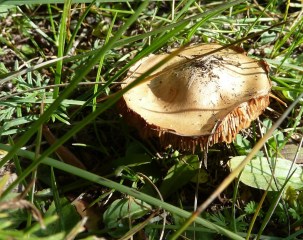 Flowers begin to fade and petals fall. Leaves, tinged with gold, spin silently earthwards, while the short season of rain saturates the woods, leaving them filled with a humid sweetness that draws fungi to life. Red and yellow minute umbrellas, tiny white puff balls and brown sombreros cover the decaying floor. Blueberry and lingonberry, sea buckthorn and cranberry shine on bowed branches, beckoning pickers to gather their bounty.
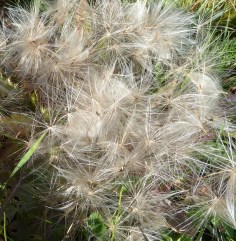 Before that new growth comes, however, we must endure the demanding season of winter. It is strange to think of winter when life is so full and the trees are still bright. But the time when all appears dried up or just plain dead will come. I wonder whether that knowledge intensifies the beauty of autumn?
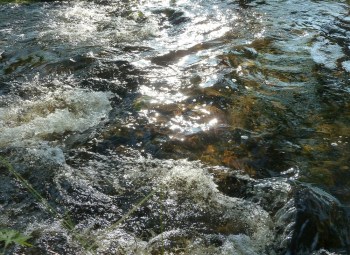 The winter here is barren, long and harsh. The brilliant sun and clear skies cover a snow-covered land devoid of growth. Yet contrary to appearances, this landscape is not dead. Come spring the land will turn green, wildlife will awaken, flowers bloom and the trees brim with leaves.
 Whatever the celebration, Mongolians will sing. In fact, people say if you can’t sing then you’re not Mongolian. At concerts, amongst the chatter, ringing of phones and eating of ice-creams, the audience will happily add their bold voices to the performance. Sometimes a famous singer will invite a child to join them; most children eagerly leap onto the stage, grab the microphone and begin singing with an unconstrained gusto that delights the audience no end.
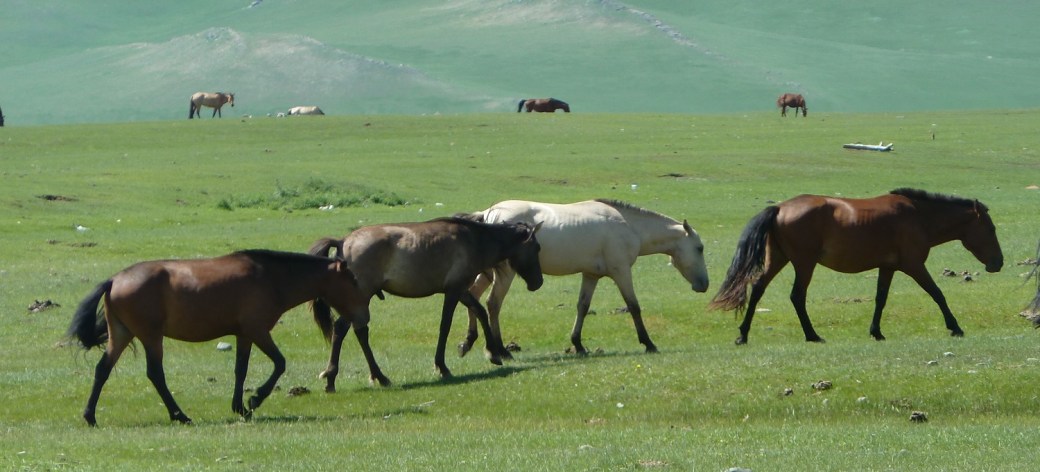 Such songs are cathartic. They lift the Mongolians, cheer their hearts and take them beyond the mundane, beyond themselves to see the beauty that surrounds them.
 In the ordinary, I praise, thank and adore Him, marvelling at His power, love and grace; aware that as I direct my praise to Him, something happens in me. I sense His presence, and my small understanding begins to grasp a little of His greatness. Humbled, I realise that neither I, nor my work, nor the troubles of this world, are the centre of my universe. He is. And not only does my simple praise re-orientate me, but it finds its home with Him, the God of heaven and earth.
 There’s an exit from the smog and traffic jams of Ulaanbaatar as people build second, or new holiday, homes. Edging to the river’s bank, fences eat up this once unfenced land. Claiming their rights, metal pens creep into the woods, diverting path and track, evicting squirrel and chipmunk in their wake. Electric saws and vintage radios sing out their music, smothering the lark and swallow’s song.
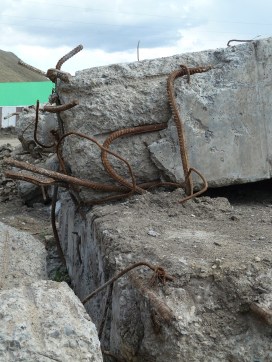 The reasons are many and varied. But the building work, for this year at least, has come to a halt. Bricks, ready for the builder’s hand, stand untouched. Wood, stacked and cut for beams and joists, is forsaken. Some begin again and go on to complete their new home, while others never return.
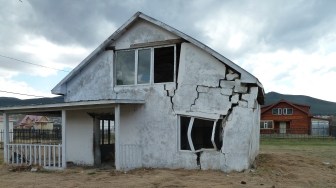 Perhaps next year, they’ll resume building. Perhaps the plan will be more solid and they’ll come equipped with all they need to move beyond the disarrayed building site and the messiness of work left unfinished. And perhaps, they will complete, with joy, what they purposed.
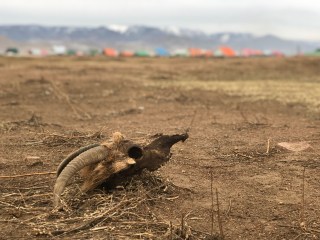 It has been a mild winter with relatively little snowfall, for which we are thankful. Although many herders would disagree. Speaking in low tones they worry that the light snow cover exposed the steppe to the worst of the winter elements damaging precious spring pasture. Anxious for their herds, they wonder whether the underfed animals will make it through the next few weeks, especially since sudden spring snowfalls can easily drift and bury cattle.
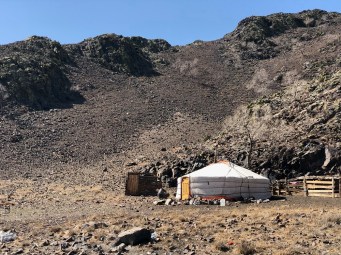 A ground squirrel wakes from his winter hibernation, pokes his head above his burrow and excitedly takes his first steps of the year. His fawn coat is the perfect camouflage in this faded landscape. He stops, standing motionless on his hindlegs, beady eyes surveying, ears twitching before scurrying back to the safety of his underground home.
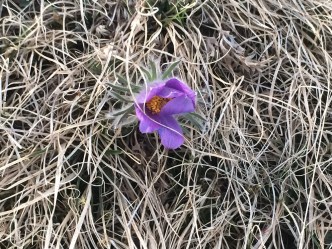 The transition from winter to flourishing spring is slow. Leafless silver birches crowd the wood and the hills are still largely desolate. And yet the landscape is not dead – merely moving through the seasons. While the animals slept, roots secure in the soil, pushed deeper through the chill until warmed they raised their heads above the earth and bloom.
 Christ a new name. Certainly, there are biblical examples of people receiving new names. Old Testament Jacob, the twister, became Israel after he wrestled with God’s angel. And Simon, one of Jesus’ disciples, had Peter added to his name.
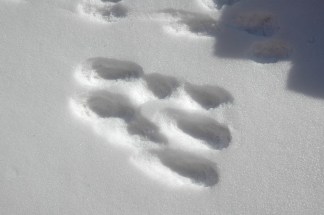 In the forest near our home, the snow had been densely laced with tracks that led to underground burrows, or simply slipped onto the next rise. To these we repeatedly added our own. Finding previous tracks, we retraced our steps up and down, reminding me that whether we walk on snow, sand or mud, our footfall leaves an impression.
 Sometimes my mind re-walks those English paths. Marked with a simple finger post they always beckon me forward on a voyage of discovery to some new or, more likely, ancient place. A favourite passes a bay-fronted old post office cum village shop that leads on to a kissing gate, which opens into a green field where the big sky promises freedom.
 The rutted and often boggy path slows me further. Yet the slowness does not hinder my way; rather the simple motion of walking, of being on a path, connects my feet to my mind in a way that brings clarity to my scrambled thoughts.
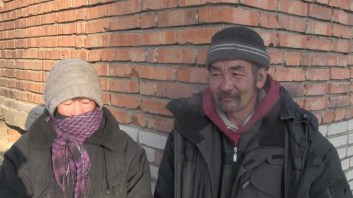 Further down the road a drunkard lies crumpled on the ground, a tattered mess of ripped clothes and dirt. At the bus stop near our home, a woman regularly waits. Shuffling in her inadequate shoes, she moves her head this way and that mouthing words no one hears. Hidden behind a layer of grime her face is dark and her hair a single clump of grease. She is used and cast aside without love.
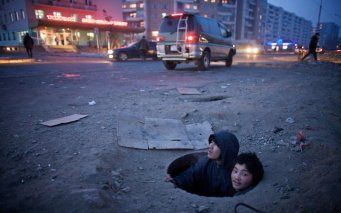 Jesus’ heart was full of compassion towards the poor and broken and it the same for us too. My heart is moved by poverty, moved by injustice. I preach the good news to the poor and seek to help them but there’s a look in their eyes that I recognise.
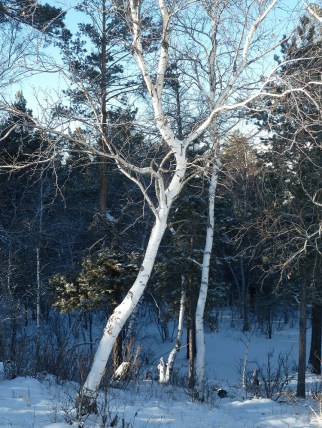 But I remind myself – the gospel only comes to me when I know that I have no merit and no power. Still, I must rely entirely on the power and salvation of Jesus Christ. The gospel is not religion. It is the outworking of my life unconditionally surrendered to Him and, this is where the rubber hits the road, its characterised by me truly allowing him to be Lord of every area of my life.
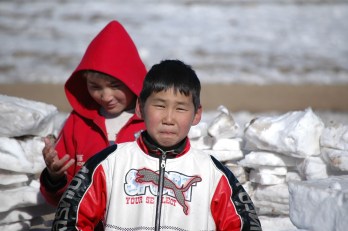 Winter is here, bringing with it the bone-chilling Siberian wind that keeps our neighbour’s outside toilet tilting closer to the ground and whips snow hard against our door. A man in the street stops for a moment to gather a handful of snow and rub it into his face. He shakes his head and, leaving me smiling, walks on.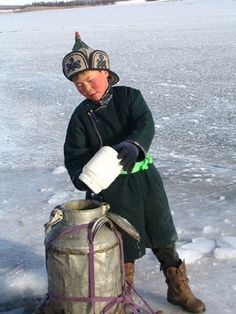
 Nomadic Pages