My mind often wonders in obscure directions making connections that others don’t easily see but which seem obvious to me.
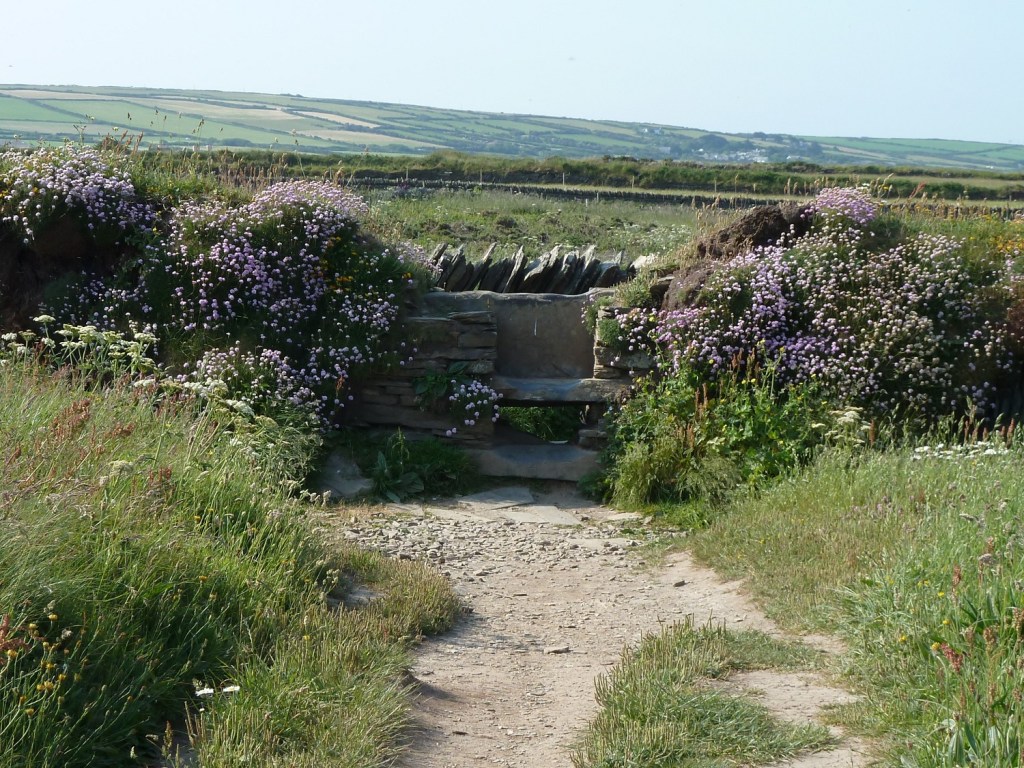
We are in Cornwall for a few quiet days before we head back to Ulaanbaatar. Taking time to walk the coast path, I find myself intrigued by the slate wall with their herringbone pattern. Known locally as Jack and Jill walls, they edge the north Cornish coast. The walls, forging snake like paths of kinks and bends across the landscape, mark boundaries and guard exposed fields against the thrashing Atlantic winds.
The walls bear testimony to a time when quarries worked the north coast. Long since abandoned, all that remains are rock pinnacles and a sea of discarded slate fragments, thousands of which form the bulwarks that protect the land. The walls are effective, but they also possess an intricate beauty of their own that reflects the ancient tradition of stonewalling practiced over centuries.
Building a dry-stone Jack and Jill wall takes care and precision. Each slate must be flat and carefully chosen to ensure that it fits in its place. But before construction begins the craftsman must lay a solid foundation, from which all other stones are anchored, positioned and lined up. Laying those foundation stones correctly ensures that the wall endures and stands strong.
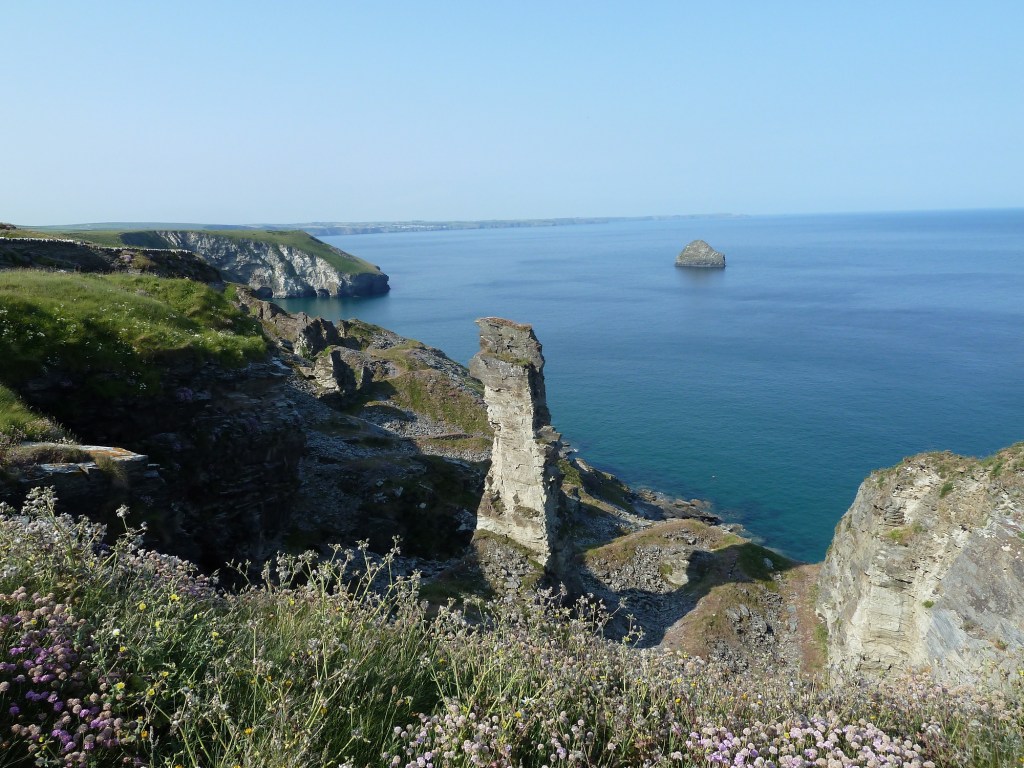
The Cornish often build two parallel walls to border fields, with earth infilling the centre. This is the Cornish hedge. As nature takes its course, the hedge teems with brimming life. Tiny animals burrow a home into the central earth infill. Wildflowers surge between stones, turf and gorse root a bed of soft capstones until the entire wall, every nook and cranny, becomes clothed with verdant diversity.
It is a beautiful picture filled, in my mind, with parallels of the church and its life. We are a building built from fragments, all different sizes and shapes, some misshapen, all blemished yet lovingly laid and angled by a master craftsman upon a firm foundation that does not move.
Our Foundation stone, Jesus Christ, keeps us, holding us in balance, interlocking our lives with His and one another’s, reminding us that we cannot flourish alone. He created us to share life, to be interdependent. This world can be an inhospitable place where we can find ourselves exposed to wild elements and relentlessly battered by a sea of challenges. Alone, we are like a single slate fragment, flaky and more vulnerable. Together, we are stronger and can live through all the seasons of life.
Naturally, stones do not live. They do not move; they cannot change and they do not learn. But we are founded on the living stone, a cornerstone far greater than ourselves that fills us with life, enabling us to grow, learn and be changed. God is building us into a spiritual house that proclaims the excellencies of our foundation.
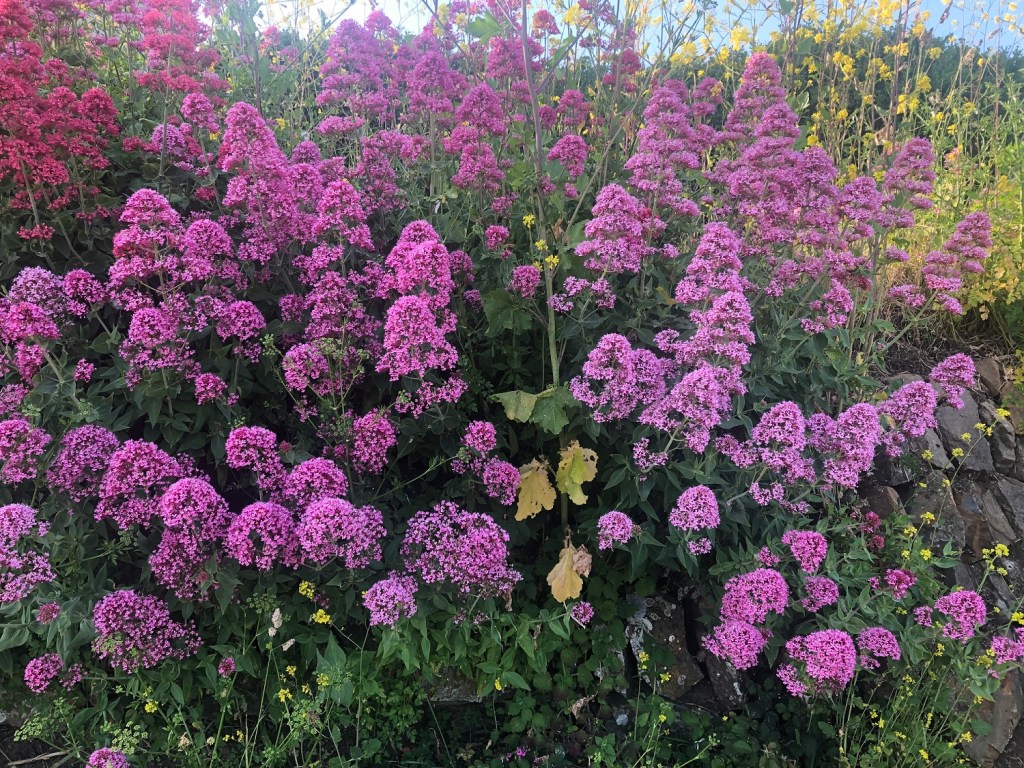
The Cornish hedges teem with life. They are not tidy or well-manicured. Plants tumble over themselves in a riot of greens and colour, drawing insects, birds and small animals. Each comes to feast on the abundance of life. The hedge thrives. Precious and life-giving, a picture of God’s heart for the church in our place – loved, affirmed and as beautiful to Him as He is beautiful to us.
© copyright Gillian Newham 2023
 Nomadic Pages
Thank you for this encouragement. The biodiversity and life in abundance, can look messy , in nature and in church, but we realise more and more that is the way it was designed to be.
Sorry I missed you when you visited our church recently.
LikeLike
Thank you for your encouragement. Likewise we were sad to miss you but our time at All Saints was very precious and we left some beautiful words of encouragement and prophecy.
LikeLike