Our neighbour scrambled onto the roof of his ger and began clearing away the snow before the hot sun melted it and water began leaking into his home. It was a simple action but a reminder that Mongolian winters are harsh. After the wet and damp we experienced in England, and the ease of life in Ulaanbaatar, where homes are warm, water is on tap and the supermarkets full of food, it is easy to forget the herders living out on the steppe.
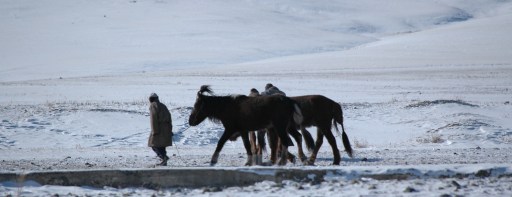
Urban Mongolia is changing and developing quickly, but Mongolia’s weather is relatively unchanged, and for the nomadic herders life remains a battle against the elements. Herders say that the weather is their master, especially during the long winter, when the cold can be ferocious and an ever-present threat to survival. But behind that master, they recognise a force. They aren’t always clear who or what that power is, other than it’s something spiritual − perhaps the god of the blue sky or the spirits that govern the earth and heavens. However, they do acknowledge there is something beyond them.
A frequent countryside winter and early spring greeting amongst herders is: “Are your animals fat?” Animals − sheep, goats, cattle, horses and camels − are the nomads’ livelihood. The animals are food and money, as well as producing dung which keeps their gers warm, and wool and skins to make felt and clothes. The nomads know that, if they care for their livestock well then, their livestock will take care of them.
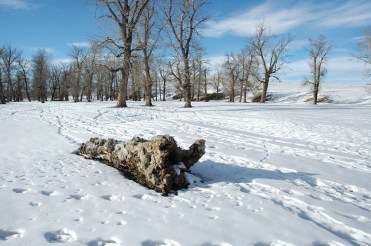 Naturally, fat animals survive the winter better than thin. In the warmer months herders will try to feed their animals up and ensure that they have fodder for the winter, but sometimes the summer grass is meagre and the animals are not strong enough for winter.
Of course, disaster rarely announces its arrival. Wild blizzards come blanketing the ground with snow, covering vegetation and drifting deep, leaving animals buried and herders feeling helpless. This is an uncontrollable world in which the nomads recognise they must adapt and make changes to work with the weather. It is not easy and yet, beneath the fears, a stoic pride rises again and again. They can survive, even flourish in the winter.
“Nature is our master,” the herders say. They know it is awesome and, generally, they treat it with respect. They recognise that they are small and subject to a power that is beyond themselves. Their ears and eyes are open and yet often they cannot see beyond the blue sky to the Creator God who sent His Son, Jesus Christ, to this earth.
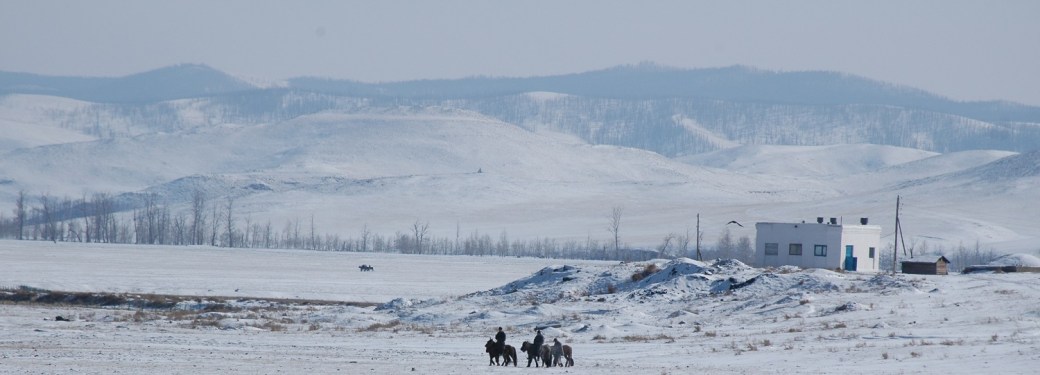
Creation speaks of its Creator. The evidence is abundant and all around us.
But hold on a minute! Even as a follower of Christ, are there times when I too am blinded to the deeper realities of the living God? Times when the rush of the immediate renders me blind and deaf to the subtle nuances of God and His word to me?
As I pray for the Mongolian herders, asking that they might see the beauty of the God who created and governs this world, I can’t help but ask that I too might not miss His Word.
 Nomadic Pages