“We used to dry beef in lengths,” said Davaajav as we sat on her sofa at home in her lounge in Arhangai. “The strips were about five or seven centimetres long and a couple of centimetres thick,” Davaajav continued, remembering her family’s time-consuming preparations for winter. “Hung on pieces of string, we dried the lengths for a month, or until they’d shrunk to the size of a small woody stick. Then we’d store them in linen bags and use them through the winter.”
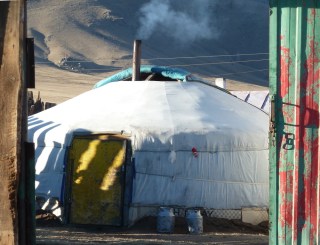 We grinned, recalling the number of times we’ve seen travelling Mongolians produce a bag containing such meat. Rubbing it between their fingers, they’d crumbled the beef onto their food, adding a tasty supplement to meatless soups and bland vegetables. Few families, particularly those in the cities, dry meat but everyone relishes the flavour.
“Summer was relaxing,” said Davaajav, “although we knew we had to think about getting ready for winter. From the forest, we’d collect wild onions, chop them finely, add aarts (soured dried milk) stir thoroughly, and then bottle them. You can’t imagine how delicious those onions made a batch of dumplings on an icy day. We also prepared and stored as much dairy as we could, stockpiled dung to fuel our stove, and cut the summer grass.”
On the drive to Arhangai, we’d passed countless small trucks piled high with grass that leant ominously towards our side of the road. Cut from agreed common ground, the grass bursts with thistles and crabgrass, dandelion, clover and rye. Sweet and rich with amino acids, it’s like a medicine that keeps the cattle healthy in the cold months.
Davaajav refilled her bowl with milk tea. “As the cold came, my father would slaughter a cow that was unlikely to make it through the winter. That cow, along with seven or eight sheep, kept us fed.
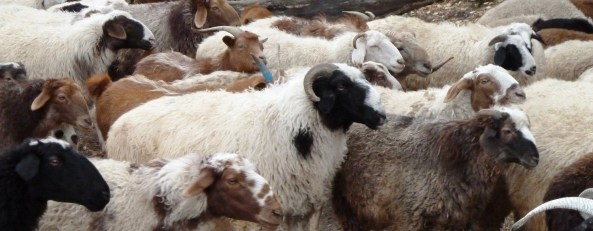
“It was a simple life. On snowless evenings, we gathered in our neighbour’s gers to play cards or ankle bones while our elders spoke of legends and old heroes. How quickly things change,” Davaajav said, wistfully.
“Change is inevitable,” we replied, aware of the rapid transitions we’ve witnessed in Mongolia.
“But not all change has real long-term benefits,” said Davaajav. “And we Mongolians do have a propensity to abandon long-practiced ways in favour of what we perceive to be progress. Look at the herders,” she said, waving her hand towards the river where many nomads live. “They have cars.”
 “Which must make life easier for them,” I added.
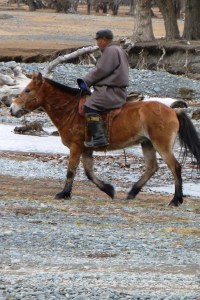
“No one is denying it makes life easier, but it also makes them lazier. Some young herder would far rather drive his expanding herd forward from the steering wheel of his car than the saddle of his horse. But sitting in his car, the herder loses the immediacy of land and his herd. If he’s perched in his saddle above the flock, a shepherd walks with his sheep, observing their health and their temperaments. He encounters the weather and sees the ground beneath his feet. He knows the dangers, and he guides his sheep to safety; to the good pasture and the place of sweet water.
“I know, we live in a developing world that we are all eager to embrace, but the car-herding herder sounds a clarion call. A young herder dreaming of owning a large herd often seeks to grow his herd quickly and neglects the true preparation necessary to care for his animals skilfully and wisely.” And that is no progress at all.
 Nomadic Pages