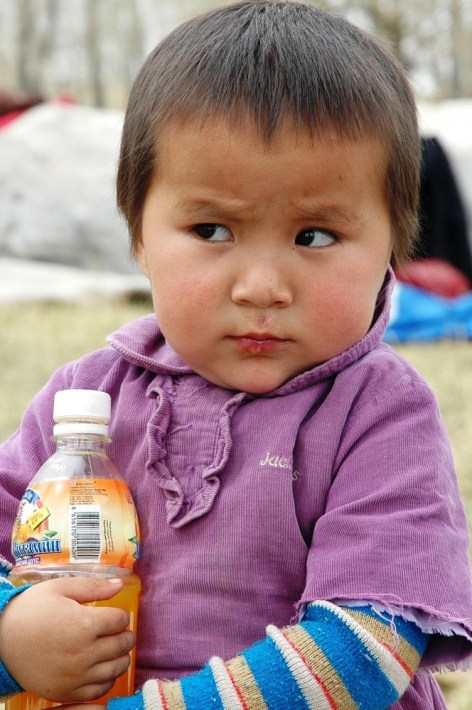
There have been three or four occasions when Mongolian friends have asked us to name their newly born child. Admittedly, one such naming happened during casual conversation when we were listing some of our favourite names. But the other three times have required much diligent thought and prayer on our behalf as we sought to choose an appropriate name.
Aware of the honour conveyed on us by such a request (traditionally the giving of names has been reserved for parents, respected elders, or religious figures) we’ve also keenly felt the weight of responsibility. Naming a Mongolian baby requires choosing a promising name with symbolic references that capture the essence of the individual’s character, and which the parents hope will bring a good future to the bearer.
Today, most Mongolian names consist of two adjectives or two nouns for example: Saran-Tuya is Moon-Ray; Altan-Tsetseg is Golden Flower. Girls’ names usually reference beauty and honourable characteristics while boys’ names tend to be linked to strength and courage – Bat-Baatar is Strong Hero, or Gan-Huu is Steel Son. Some names are gender neutral and some families choose to call all their girls – something Flower or something Ray, or all their boys something Baatar. While a few, fearing the power of evil spirits, call their children Not This One, or No Name. But in almost all cases, the name’s meaning has been thoughtfully considered and chosen.
Fewer parents in the west would choose their child’s names with such concerns. We may know the meaning behind a name and be thrilled to give such a name to our children, but I don’t think we’re constantly recalling the meaning of that name as the child grows to adulthood.
In fact, I had to look up the meaning of my name, Gillian: the medieval English feminine form of Julian. Latin: youthful. I can’t imagine my parents thought I’d be forever youthful!
Nevertheless, our names are vital. They connect us to our world, allowing us to be known by acquaintances, friends, and our family.
In biblical times names were important too. Often, they implied a person’s character or his or her deserved reputation. And some names were, as the Mongolians recognise, predictions or prophecies of what kind of person a child would grow up to be.
Names make a difference. The Bible tells us that God knows our name which acknowledges His closeness to us. The Bible also tells us that God gives the followers of  Christ a new name. Certainly, there are biblical examples of people receiving new names. Old Testament Jacob, the twister, became Israel after he wrestled with God’s angel. And Simon, one of Jesus’ disciples, had Peter added to his name.
I am not sure what our new name is but I do recognise that as believers in Christ, we enter a new standing with God. His grace has come, and that enables us to be transformed.
Walking daily with Christ, I pray, audaciously perhaps, that my new name might reflect the growing character of God in me.
 Nomadic Pages