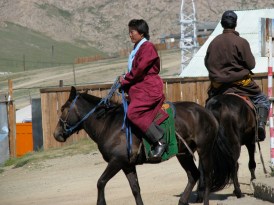
 Mongolians are extraordinary horsemen. And perhaps it’s always been so. Certainly horsemanship has featured heavily in Mongolia’s history and their world. In the thirteenth century the ground shuddered to the sound of the Mongol hordes, warriors and their warhorses, thundering north, south, east and west as they conquered tribes and nations to establish their long since diminished empire.
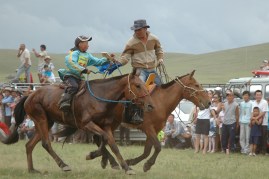
Riding trusted horses they endured hardships, fearing neither hunger nor thirst, heat nor the bitter Siberian cold. They galloped for days, weeks, months, up and down mountains and across the open steppe covering all and any terrain with reckless confidence. Standing in their stirrups they screamed like crazed wolves, ready for the kill, until they melted the hearts of all those who encountered them.
Today many countryside Mongolians, whether they’re racing across the open plains or lassoing an unbroken stallion, possess the same finely honed horsemanship as their ancestors. However, city dwellers are changing and prefer to keep their horsepower harnessed beneath the bonnets of their cars. And yet it is with the same reckless abandon that they drive their metallic horses through the streets of Ulaanbaatar.
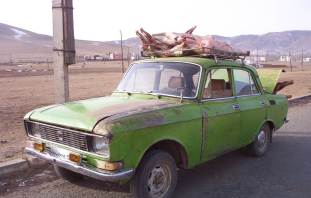 Twenty years ago two cars was a traffic jam but today the city streets are choked with a mass of metal as cars, buses and trucks all vie for first position. Without a hint of mirror or signal, drivers manoeuvre in and out of buses lanes. Or drawing their breath in, they slyly wedge themselves into non-existent gaps that force others to stop, before everyone, (well almost everyone,) comes to a standstill at stop signs. Toes to the metal young drivers rev the engines of their hand-painted saloons to fever pitch. As they screech away from the lights acrid rubber smoulders on the tarmac while plumes of black smoke escape piston-shot engines.
Driving in Mongolia is like a competition to overtake the rest and be first. Perhaps, it’s natural, revealing man’s heart. But without the constraints of the rules of the road or life’s boundaries would I be the same? Underneath my sensibilities and the veneer of politeness, in some shape of form, perhaps I’m competing too. Certainly the world subtly whispers that it’s the way things should be. It applauds my desire to be first. It values success and the subsequent power it gives to beat the rest.
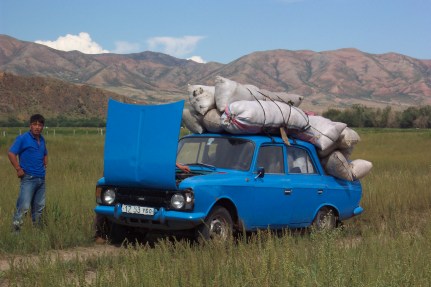 Rising in the midst of my craving a desire can gather momentum; I want to push others aside and grab the prize for myself. But the moment I succeed, the moment I grasp it in my hand its glory is disappears. My success is short-lived without any real depth or value to it. And against the backdrop of Jesus’ character, respect for the world’s ways seems pitiable.
God tells us not to be controlled by the things the societies considers critical but rather to follow His way. Life in God is a remarkable reversal of values. He calls us to abandon our wills to Him, and sometimes that involves laying down our strength to serve others and enable them to be first. At such times our competitive world considers this feebleness. Yet going against the flow, preferring others above ourselves, we lay hold of the true prizes that do not fade: satisfaction here and lasting joy and a deeper understanding of our God.

A few Ulaanbaatar drivers are taming their metallic horses. They strive to run less with the wind and even follow some of the rules of the road.
 Nomadic Pages